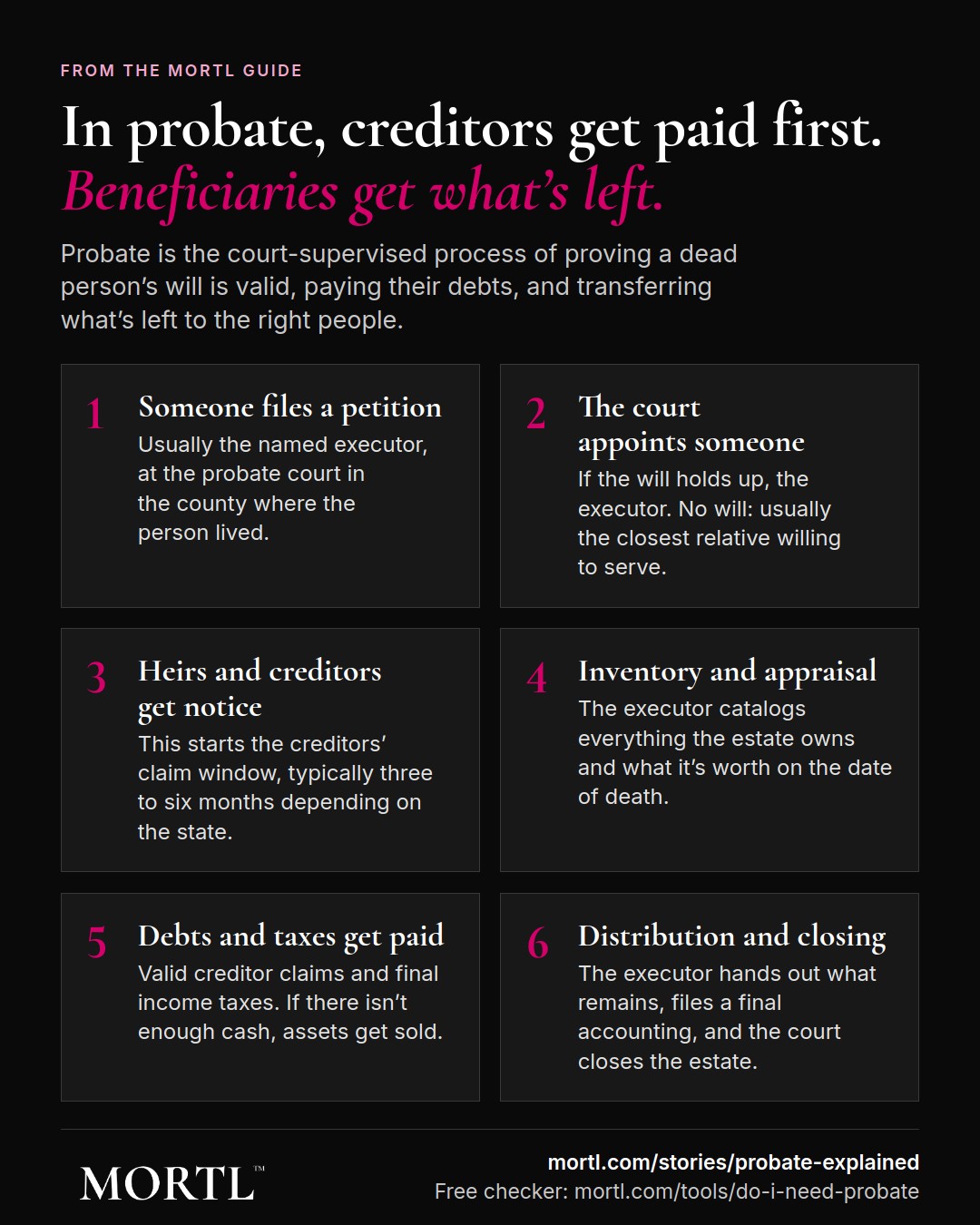
1. Someone files a petition. Usually the person named as executor in the will, at the probate court in the county where the person lived [10]. The will and death certificate go with it. No will? Same court, and the process runs under intestacy rules instead.
2. The court validates the will and appoints someone. If the will holds up, the executor gets “letters testamentary,” the document that makes their authority real [11]. Banks won’t talk to you without it. No will means the court appoints an administrator, usually the closest relative willing to serve [2].
3. Notice goes out. Heirs and beneficiaries get formal notice. So do creditors, often through direct notice plus a published legal notice [10]. This starts a claim window, typically three to six months depending on the state, during which creditors can demand payment from the estate [12] [13].
4. Inventory and appraisal. The executor catalogs everything the estate owns and what it’s worth on the date of death [10]. Real estate and unusual assets may need formal appraisals. This is the part that takes over the dining room table. We covered the lived reality of it in What Does an Executor Actually Do?
5. Debts and taxes get paid. Valid creditor claims, final income taxes, and, for a small number of large estates, estate taxes [8] [10]. If there isn’t enough cash, assets get sold. Beneficiaries get paid after creditors [2]. Always.
6. Distribution and closing. The executor distributes what remains per the will or the intestacy statute, files a final accounting, and the court closes the estate [5] [10].