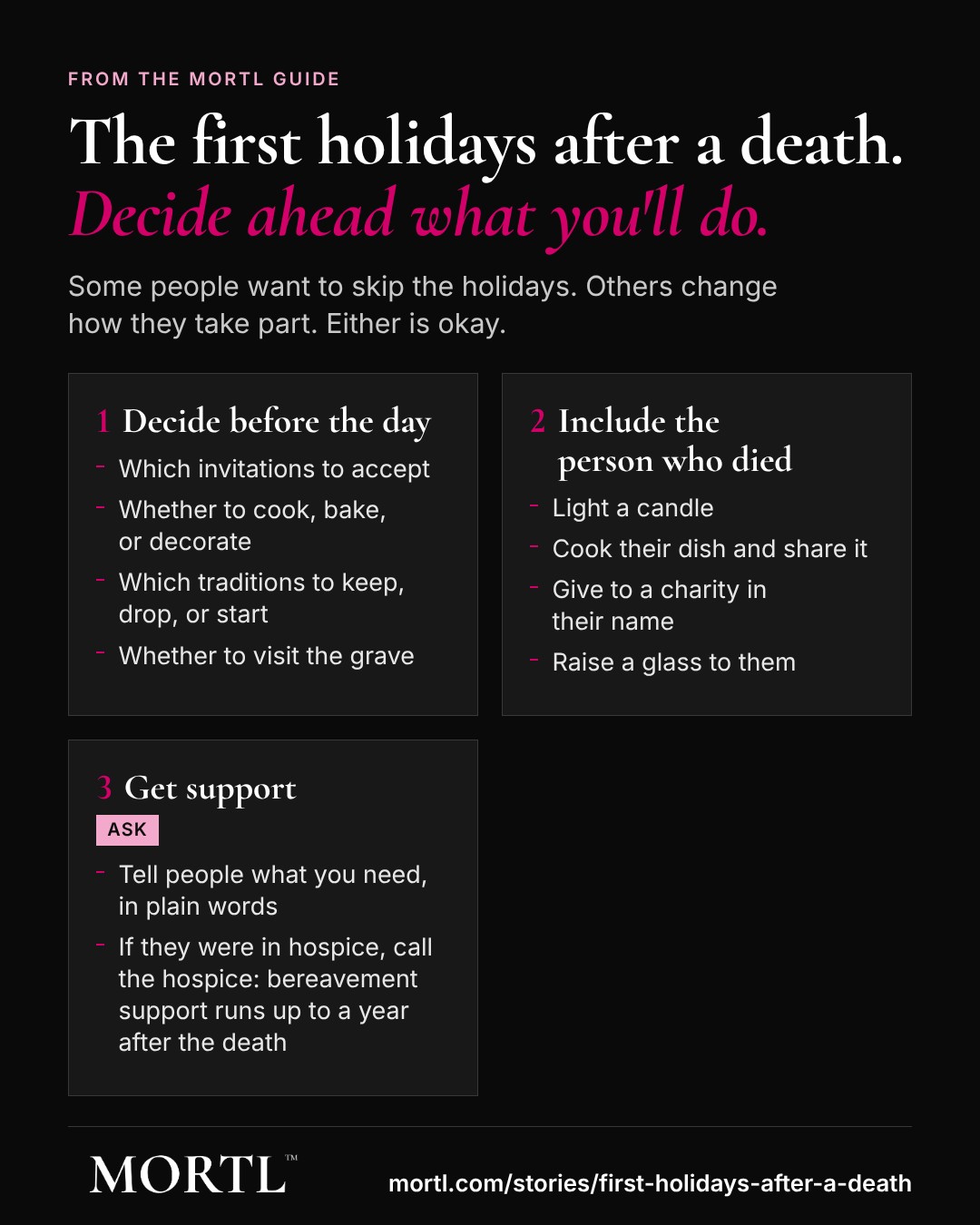
Grief can come back harder around holidays and dates that mattered.[1] The American Psychiatric Association says grief symptoms may rise at different points in time and usually don't need mental health treatment.[3]
For some people it doesn't ease. The APA estimates that 4 to 15 percent of bereaved adults develop prolonged grief disorder: intense longing for the person or preoccupation with thoughts of them, with symptoms nearly every day for at least a month, that disrupts daily life.[3] The diagnosis applies only after at least a year for adults and at least six months for children and teens, and treatments using cognitive behavioral therapy have been found to reduce symptoms.[3]
If that sounds like you, or like someone you love, a doctor or a grief counselor is the right next call.