People ask this two ways: how long does a power of attorney last, and does a power of attorney expire. The answer depends on the type, and the endpoints are few.
Durable. Works from signing, keeps working through incapacity, and ends when you die or when you revoke it [1]. Little else stops it. A divorce from an agent who’s your spouse, or a court naming a guardian or conservator, can also end the agent’s authority [2].
Springing. Dormant until a trigger, usually a physician certifying your incapacity. From that trigger it runs until your death. Before the trigger, you can revoke it like any other POA.
Non-durable. Ends at your incapacity, and at death like everything else [1]. This is the type built for a single job: the real estate closing you can’t attend, the deal signed from overseas. Some are written to end when that task is done.
Expiration dates. A power of attorney has no built-in shelf life. It expires on a date only if the document names one. No named date, no expiration. Some banks push back on documents that are years old and ask for a fresh one, but that’s institutional policy, not law.
Revocation. While you’re able to make the decision, you can revoke any power of attorney at any time [2]. Do it in writing, give the revocation to the agent, and send it to every bank and institution that has the old document on file. If the original was recorded with the county, record the revocation too.
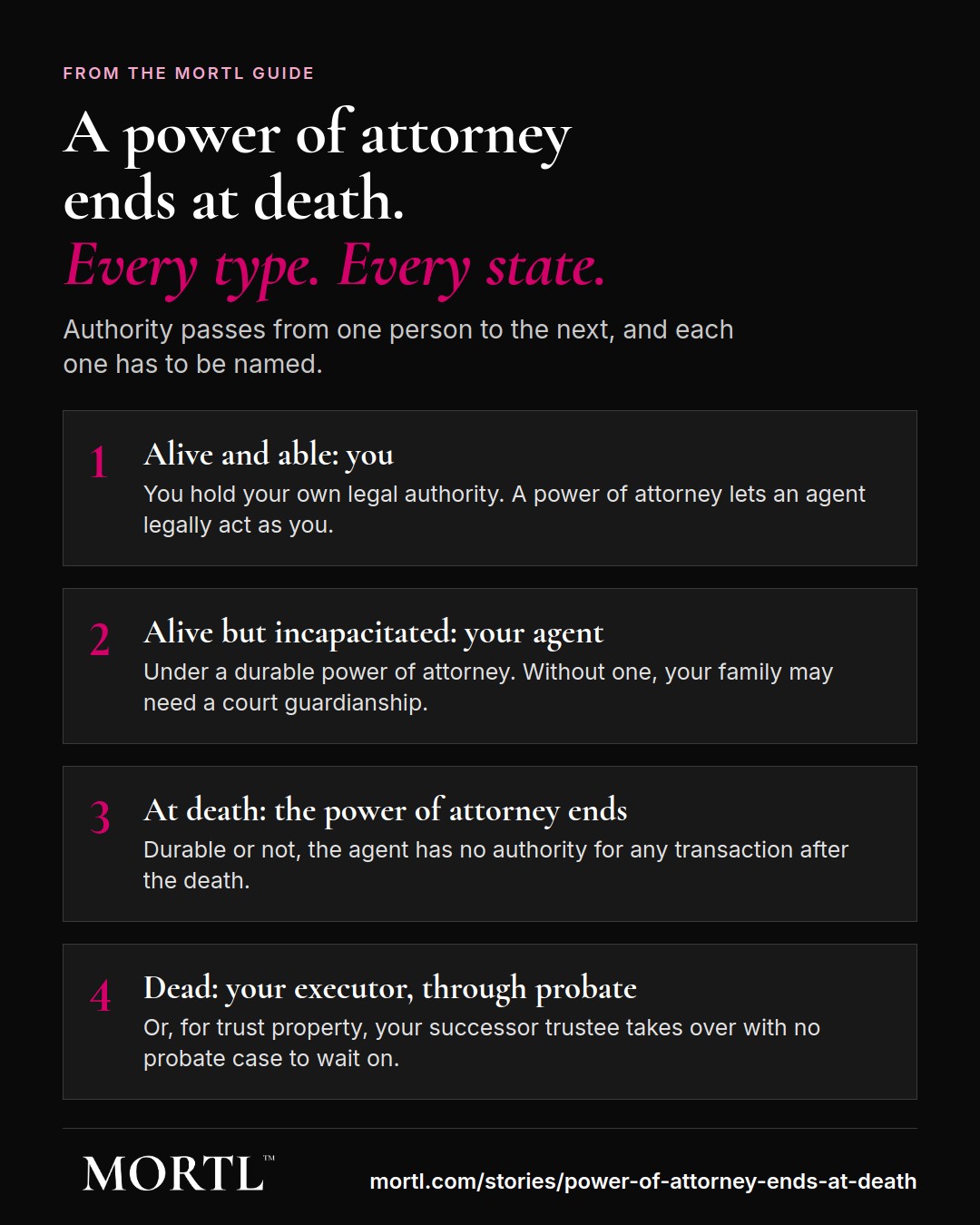
So every type has the same ceiling: your death. Everything above is about how much earlier it can end. For what each type is and how to choose between them, see our full guide, Power of Attorney, Explained.