End-of-Life CareJuly 2026 · 6 min read

Can a Dying Person Hear You?

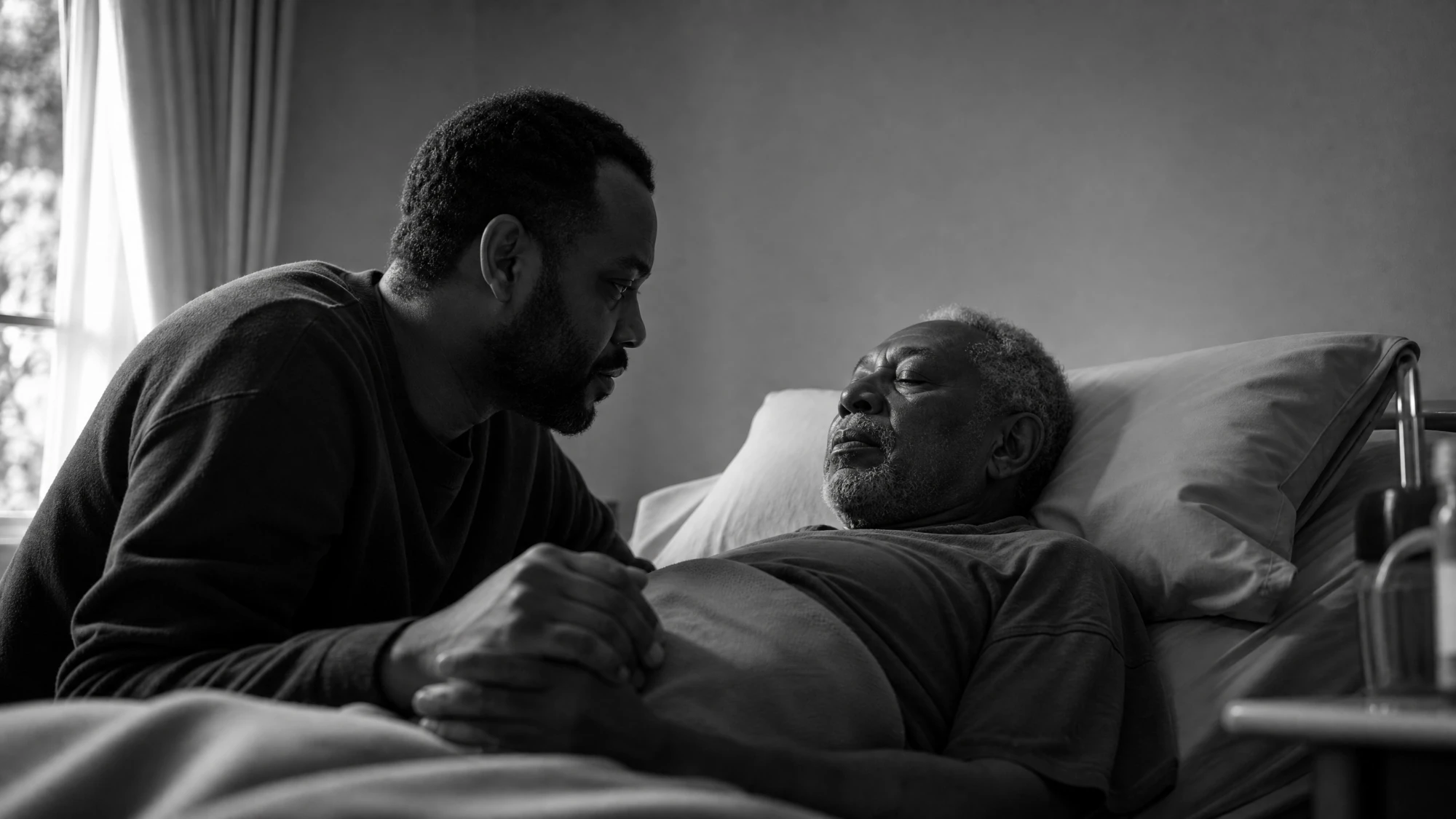
Almost certainly yes, for longer than you would think. Hearing is widely considered the last sense to fade, and there is now direct evidence that unresponsive dying people still register sound. So keep talking.

In This Article

Yes. As far as anyone can tell, a dying person can hear you well past the point where they can answer, and probably right up to the end. Hearing is widely considered the last sense to fade, and there is now direct laboratory evidence that unresponsive dying people still register sound. So say what you need to say, out loud, to the very end.

This is one of the most common and important questions families ask, and the answer is reassuring. For the full picture of the final days, read what dying actually looks like.

Can a dying person hear you?

A dying person can very likely hear you, even when they can no longer respond, move, or open their eyes. Hospice and palliative clinicians work on the long-standing assumption that hearing continues after the other senses fade and after the ability to react is gone, and they encourage families to keep speaking normally to the person.[1]

So the silence goes one way. The person may look completely absent and still be taking in your voice.

Is hearing really the last sense to go?

Hearing is generally considered the last of the senses to fade at the end of life, and recent research supports the long-held clinical belief. In a 2020 study, researchers recorded the brain activity of actively dying hospice patients and found that even unresponsive patients, within hours of death, still showed brain responses to sound similar to those of healthy young listeners.[2]

That does not prove the person consciously understands the words. It does show the dying brain is still processing sound when everything else appears to have stopped, which is why the guidance is to assume they can hear.

Can someone unconscious or in a coma hear you?

Possibly, yes. Unresponsiveness is not the same as absence. A person who is unconscious, deeply sedated, or in a coma near the end of life may still register sound even though they cannot show it. Because there is no way to be certain from the outside, clinicians advise treating an unresponsive dying person as though they can hear everything said in the room.[1]

That cuts both ways: it is a reason to keep talking to them, and a reason to be careful what is said around them.

What should you say to a dying person who cannot respond?

Say the ordinary, true things: that you love them, that you are there, that it is okay. Talk to them normally, use their name, and say anything you would regret leaving unsaid. You do not need special words. Many hospice teams suggest gently giving the person permission to go, telling them the people they worry about will be all right.[3]

Keep the rest of the room's conversation kind, too. Assume every word reaches them.

Does a dying person know you are there?

There is good reason to believe a dying person often knows you are there, through your voice and your touch, even when they cannot signal it. Familiar voices and a held hand are thought to be a comfort right to the end. Nobody can confirm the inner experience, but the evidence on hearing, plus what clinicians observe at the bedside, points toward presence being felt.[2]

This is why being in the room matters even when it feels one-sided. Your presence is very likely landing.

When does hearing finally stop?

Hearing likely persists until very close to death, and there is no exact, observable moment when it switches off. Because it is thought to be the last sense to go, the safe assumption is that a person can hear you until they have died. There is no downside to continuing to speak to them, and a real chance it reaches them.[1]

If you arrive after someone can no longer respond, you have not missed your chance to be heard. Sit down and talk to them.


This page is death education, not medical advice. The reassurance here, that a dying person can likely hear you, is the guidance hospice teams give families. For where these facts come from, see our Sources and Methodology.

Sources & References

Research & Citations

All factual claims in this article are sourced from peer-reviewed research, government data, and named institutions. Citations follow APA 7th edition format.

  1. [1]National Institute on Aging. (2022). Providing care and comfort at the end of life. U.S. Department of Health and Human Services, National Institutes of Health. ↗ Source 2026-07-23
  2. [2]Blundon, E. G., Gallagher, R. E., & Ward, L. M. (2020). Electrophysiological evidence of preserved hearing at the end of life. Scientific Reports, 10, 10336.
  3. [3]Hospice Foundation of America. (n.d.). Signs of approaching death. ↗ Source 2026-07-23
ShareX / Twitter

Keep Reading

End-of-Life Care

What Dying Actually Looks Like

The final days follow a pattern hospice nurses know by heart. The breathing changes. The eating stops. Here's what's normal, what's not, and why knowing the difference matters for the people in the room.

9 min read
End-of-Life Care

The Surge of Energy Before Death, Explained

Some people get suddenly, briefly better in the days before they die: awake, talking, hungry, themselves again. It is called the surge, or terminal lucidity. It is not recovery. It is one of the hardest parts of a death to be warned about, so here is the warning.

6 min read
End-of-Life Care

Everyone Wants to Die at Home. Almost Nobody Plans for It.

Dying at home takes equipment, caregivers, and a plan for the moment itself. Including who you call and who you don't. Here's what it actually takes to make it happen.

9 min read
End-of-Life Care

What Happens to the Body After Death

The heart stops and the body starts changing right away: it pales, cools, stiffens, and then decomposes. Here is what happens minute by minute and day by day, in plain language, without the horror-movie version.

8 min read

The Death Dispatch

More stories like this, weekly.

A newsletter about death you'll actually look forward to reading.