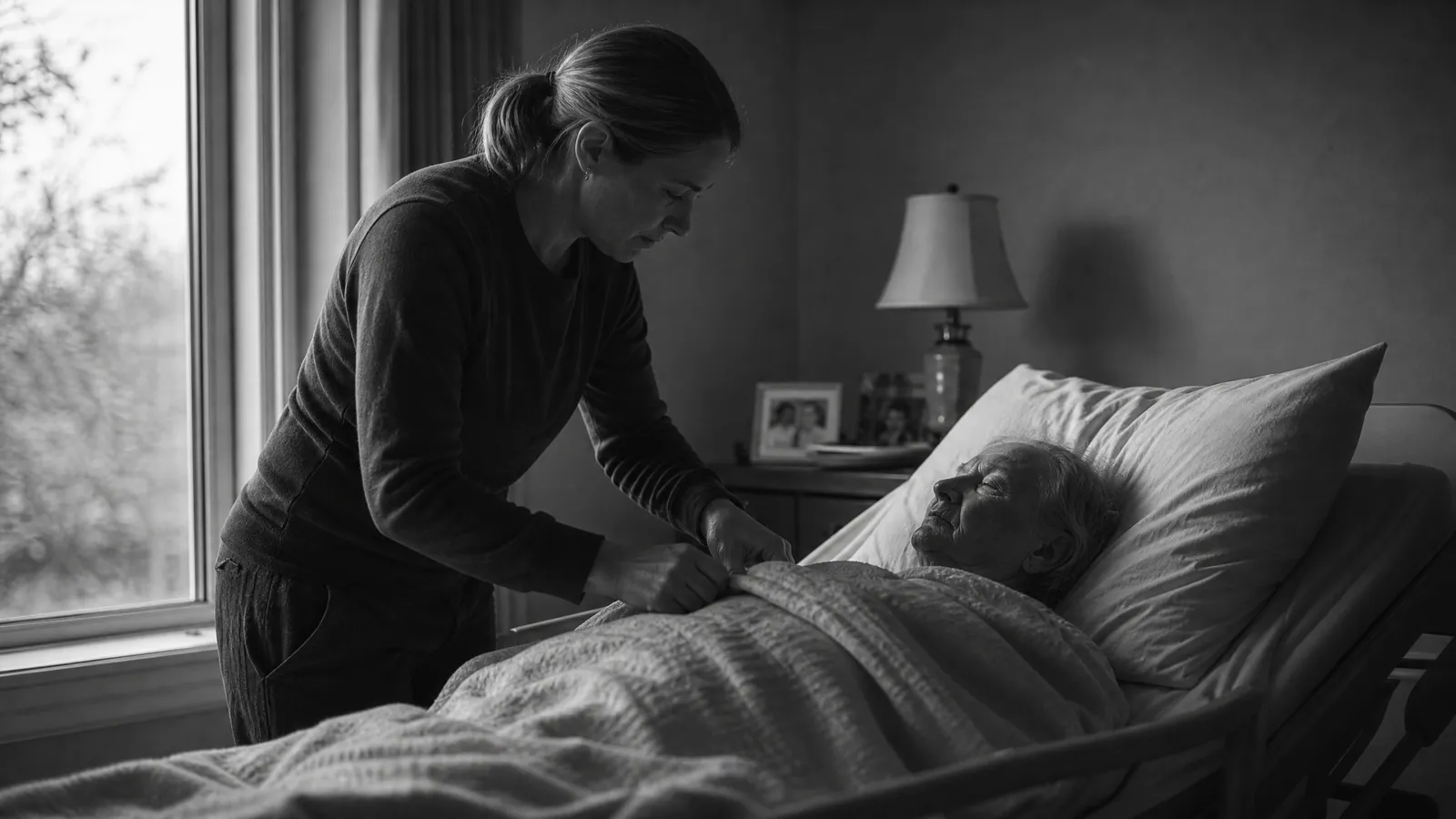
“Family covers the rest of the week” stays abstract until you see the task list. Here’s what those hours contain, drawn from the education material hospices hand to families. Samaritan’s caregiver guide is a typical example, and the Hospice Foundation of America lists the same core duties [5][6].
Medications, on the clock. Pain control works by staying ahead of pain, so doses run on a schedule, even when nobody’s complaining [5]. You give them, day and night, and you log every dose, because the nurse will ask and because at 4 a.m. nobody remembers. Never crush a pill or open a capsule unless the nurse told you to [5].
Repositioning. A person who can’t move gets turned in bed every two hours, and shifted every hour in a chair, with pillows between the knees and under the heels [5]. Pressure sores form in hours and they’re agony. This one task prevents more suffering than anything else on the list.
Mouth care. At least three times a day: oral swabs, then lip balm [5]. Near the end it matters even more. When swallowing stops, a clean, moist mouth is most of what physical comfort still means.
Feeding, while it lasts. Small amounts, offered often, never forced. Appetite loss is the dying, not your cooking. The instinct to push food is love. The instruction is to stop.
Nights. The medication schedule doesn’t pause at midnight, and neither does agitation. Someone is on shift every night, awake or wakeable. This is the part that breaks caregivers, which is why the roster above needs names written next to the night slots.