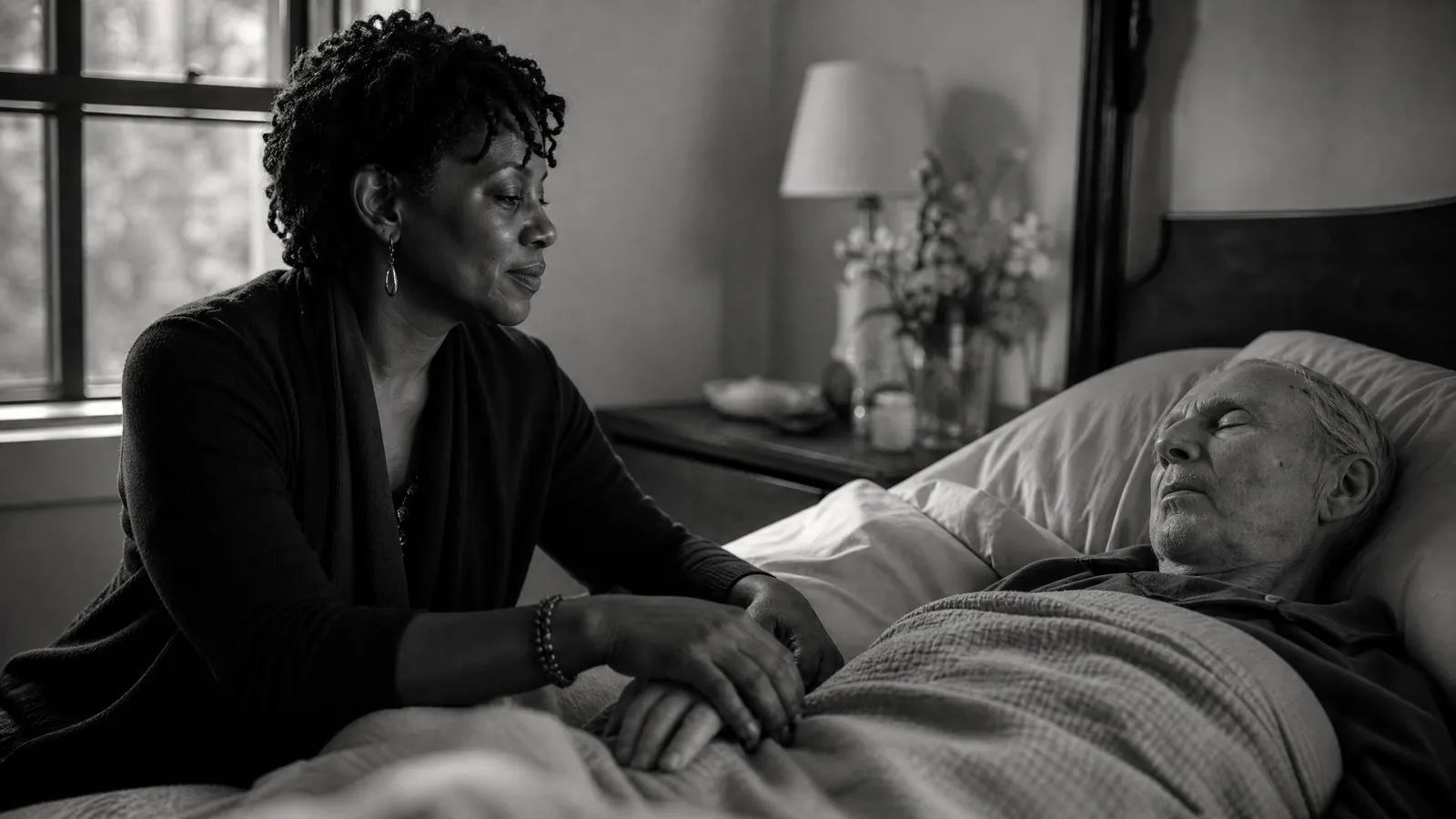
Doula is a birth-world word: the non-medical support person who guides a family through labor. Around two decades ago, hospice workers started asking the obvious question. Why does birth get a trained guide and death gets a pamphlet? A hospice social worker named Henry Fersko-Weiss built one of the first formal end-of-life doula programs at a New York hospice in the early 2000s, and the model spread from there [1].
The work sorts into four buckets.
Before: planning the death you actually want. Doulas start the conversations most families can’t. What does a good last month look like. Who’s allowed in the room and who isn’t. Music, silence, readings, outside, candles, the dog on the bed. They turn vague dread into a written vigil plan, and they often run the practical prep alongside it, in ways that dovetail with everything in our dying at home guide.
Legacy work. Recording the stories. Letters to grandchildren who aren’t born yet. The recipe file, finally written down. Doulas are often the ones who make sure a life gets captured while its owner can still tell it.
During: the vigil. In the final days, doulas do shifts at the bedside so a spouse can sleep, keep the plan running, explain to a frightened family what the body is doing and why it’s normal, and hold a calm center in a room that badly needs one. Hospice nurses visit. Doulas can stay.
After. The first hours after a death are disorienting, and they come with a to-do list. Doulas guide families through them, including home funeral practices for the families who want to wash and dress their person themselves, and they typically follow up through early grief.
Just as important is what they don’t do. Doulas don’t administer medication, perform medical tasks, or replace hospice [2]. No competent doula claims to. The best analogy: hospice manages the dying body. The doula manages the experience around it.