CultureBy Stephanie Werner · July 2026 · 7 min read

Death Cafes and Death Salons: Where Strangers Talk About Dying

A room, some strangers, and one subject nobody brings up at dinner. Death cafes have run in 97 countries since 2011. Death salons are the version built for people who need the room to be safer than that. Here's what actually happens in one.

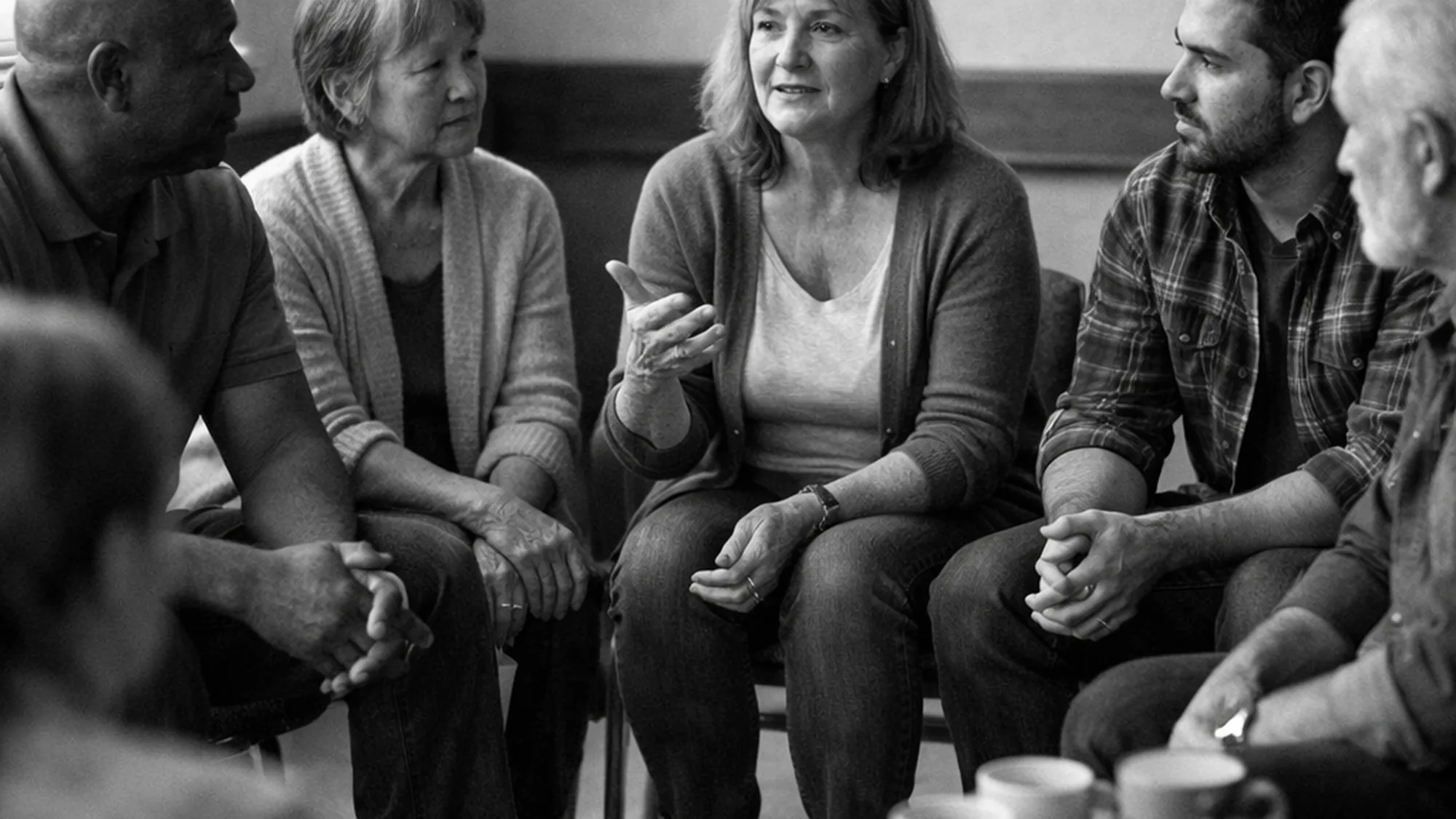
A small group of adults of different ages and races sitting in a semicircle talking, in black and white

In This Article

You can go your whole adult life without once saying out loud that you're going to die. Most people do. Then someone gets a diagnosis, and a family that's never rehearsed the conversation has to have it in a hospital corridor at 2am.

A death cafe is a room where people practice first. No agenda, no speaker, no sales pitch. Strangers sit down and talk about dying, then go home. Since September 2011 there have been 24,271 of them in 97 countries.[1]

What is a death cafe?

A death cafe is a group discussion about death with no agenda and no topic set in advance. It isn't therapy, it isn't grief counseling, and nobody's selling anything. The stated aim is "to increase awareness of death with a view to helping people make the most of their (finite) lives."[1]

The format is deliberately plain. People sit in a circle, usually with tea and cake, and say what's on their minds. Someone facilitates lightly, mostly to keep one person from dominating and to make sure nobody gets talked over.

Death Cafe runs on a not-for-profit basis and asks organizers to keep it that way, in "an accessible, respectful and confidential space" with "no intention of leading people to any conclusion, product or course of action."[1] If you show up to one and someone's pitching prepaid funeral plans, you're not at a death cafe.

Where death cafes came from

The idea traces to Swiss sociologist Bernard Crettaz, who ran gatherings he called cafés mortels. Jon Underwood read about Crettaz's work in November 2010 and built the model that spread, with his mother Sue Barsky Reid, a psychotherapist, designing the facilitation.[1]

The first Death Cafe in the UK ran in Jon's house in Hackney, east London, in September 2011.[1] The same year, mortician Caitlin Doughty founded The Order of the Good Death, which became the other main engine of what people now call the death positive movement.[2]

Fifteen years later the format has barely changed, which is part of why it works. There's nothing to buy and nothing to join.

What actually happens in the room

Less than you'd expect, and that's the point. A facilitator opens by saying what the session is and isn't. People introduce themselves. Then someone says the first real thing, and the rest follows.

What comes up, over and over:

  • Being afraid of the dying part rather than being dead
  • A death that was handled badly and never got discussed again
  • Not knowing what a parent wants and not knowing how to ask
  • Guilt about relief when a long illness ends
  • What to do with a body, and finding out you have more options than you thought

Attendance is usually small. Two people is a real session. Nobody's required to speak, and leaving early is fine.

People often arrive worried that thinking about death this much makes them strange. Nefertiti Moor, a death doula who runs salons at a Philadelphia cemetery, put the effect plainly: it helps people realize "I'm not alone, or I'm not morbid or I'm not wild for thinking about death."

What is a death salon?

A death salon is the same conversation held for a specific community, run by someone from it. The name nods to 18th-century French salons. The reason for the format is more practical than the name suggests.

An open-to-everyone room isn't neutral for everyone in it. If you spend the session explaining your family, your faith, or your relationship before you can get to the actual subject, you never get to the actual subject.

Moor's salons are for people of color. She's described the conditions they respond to directly: cultural norms where death isn't discussed until there's a crisis, families "scrambling to make decisions during some of the hardest parts of their lives," financial barriers to funeral planning, and mistrust of the healthcare system. That mistrust is earned, and we cover the numbers behind it in the end-of-life care gap Black families get handed.

Queer death cafes exist for related reasons. Trans people are over four times more likely than cisgender people to experience violent victimization, according to Williams Institute analysis of National Crime Victimization Survey data from 2017 and 2018.[3] On top of that, people worry about being misgendered or called a former name after they die, and about a partner being pushed aside by a family that never accepted the relationship.

Those are specific, practical fears, and they need a room where saying them out loud doesn't cost anything.

Kyra Overmier, a death doula who co-founded The Art of Dying, described what the affinity format buys: "In affinity groups like this where we can come together, it just allows for this freedom."

The rules that make it work

The rules are few and they carry the whole thing.

  • It's a discussion, not counseling. Nobody's being treated. If someone's in acute crisis, a death cafe isn't the right room and a good facilitator will say so.
  • Confidential. What's said stays there.
  • No agenda. No slides, no theme, no reading assignment.
  • Nothing for sale. Not a funeral plan, not a course, not a doula's services.
  • Nobody has to talk. Sitting quietly is participating.

The facilitator's job is small and it matters: start it, protect the quiet people, end on time.

How to find one or start one

Search the directory at deathcafe.com for sessions near you. Listings include online ones, which matter if you're rural or you'd rather not be seen walking into something.

Hospices, hospital palliative care teams, public libraries, and some cemeteries host them too, and those don't always show up in the directory. Call and ask.

Starting one isn't hard. You need a room, a time, a few chairs, and someone willing to say the first sentence. Death Cafe publishes its guide free and asks you to follow the model, keep it not-for-profit, and not use it to sell.[1]

If you'd rather work through this on your own first, the end-of-life planning checklist covers the documents and decisions, and how to talk to a dying person covers the conversation you may actually be dreading.

Common questions

Is a death cafe a grief support group?

No. A death cafe is a discussion group about mortality with no agenda, and it's explicitly not counseling or bereavement support. If you're in early acute grief, a grief group or a therapist is a better fit. Plenty of people attend both.

Does a death cafe cost money?

No. Death Cafes are run on a not-for-profit basis. Some hosts ask you to cover the cost of tea and cake, and that's it. Anyone charging admission or selling a product isn't running a Death Cafe under the model.

What is the difference between a death cafe and a death salon?

The conversation is the same. A death salon is usually held for a specific community and facilitated by someone from it, such as people of color or LGBTQ+ people, so participants don't have to explain their context before they can talk about dying.

Do I have to talk at a death cafe?

No. Listening is participating. Most facilitators say so at the start, and leaving early is fine.

Who can start a death cafe?

Anyone. There's no certification. Death Cafe publishes a free guide and asks organizers to follow the model, keep it not-for-profit, hold it in a respectful and confidential space, and never use it to sell anything.

Sources & References

Research & Citations

All factual claims in this article are sourced from peer-reviewed research, government data, and named institutions. Citations follow APA 7th edition format.

  1. [1]Death Cafe. (n.d.). What is Death Cafe? ↗ Source Retrieved July 30, 2026
  2. [2]The Order of the Good Death. (n.d.). Home funerals and death positive resources. ↗ Source Retrieved July 30, 2026
  3. [3]Flores, A. R., Meyer, I. H., Langton, L., & Herman, J. L. (2021). Gender identity disparities in criminal victimization: National Crime Victimization Survey, 2017-2018. American Journal of Public Health. Williams Institute, UCLA School of Law. ↗ Source Retrieved July 30, 2026
  4. [4]Going with Grace. (n.d.). End-of-life planning and death doula training. ↗ Source Retrieved July 30, 2026

Share this story

Post it, or send it straight to the person who needs it. The link goes with it.

Keep Reading

End-of-Life Care

Death Doulas: What They Do, What They Cost, How to Vet One

A death doula sits with people who are dying. No medical role, no license, no regulator. That last part is why you need to know exactly what to ask before you hire one.

7 min read
End-of-Life Care

The End-of-Life Care Gap Black Families Get Handed

Black older adults are far less likely to get hospice, far more likely to die in a hospital, and far more likely to die a death nobody saw coming. The numbers are specific and so are the things that help. Here are both.

8 min read
Culture

Why Americans Are Terrified of Death (And What It's Costing Them)

A deep dive into death avoidance culture and the $20 billion industry that profits from it.

10 min read
End-of-Life Care

How to Talk to Someone Who Is Dying

Show up, be honest, and stop performing. The hardest part is the fear of saying the wrong thing, which keeps people from saying anything. A dying person usually wants presence and truth, and the brave face just gets in the way. Here’s how to have the conversation.

7 min read

The Death Dispatch

More stories like this, weekly.

A newsletter about death you'll actually look forward to reading.