End-of-Life CareBy Stephanie Werner · July 2026 · 8 min read

The End-of-Life Care Gap Black Families Get Handed

Black older adults are far less likely to get hospice, far more likely to die in a hospital, and far more likely to die a death nobody saw coming. The numbers are specific and so are the things that help. Here are both.

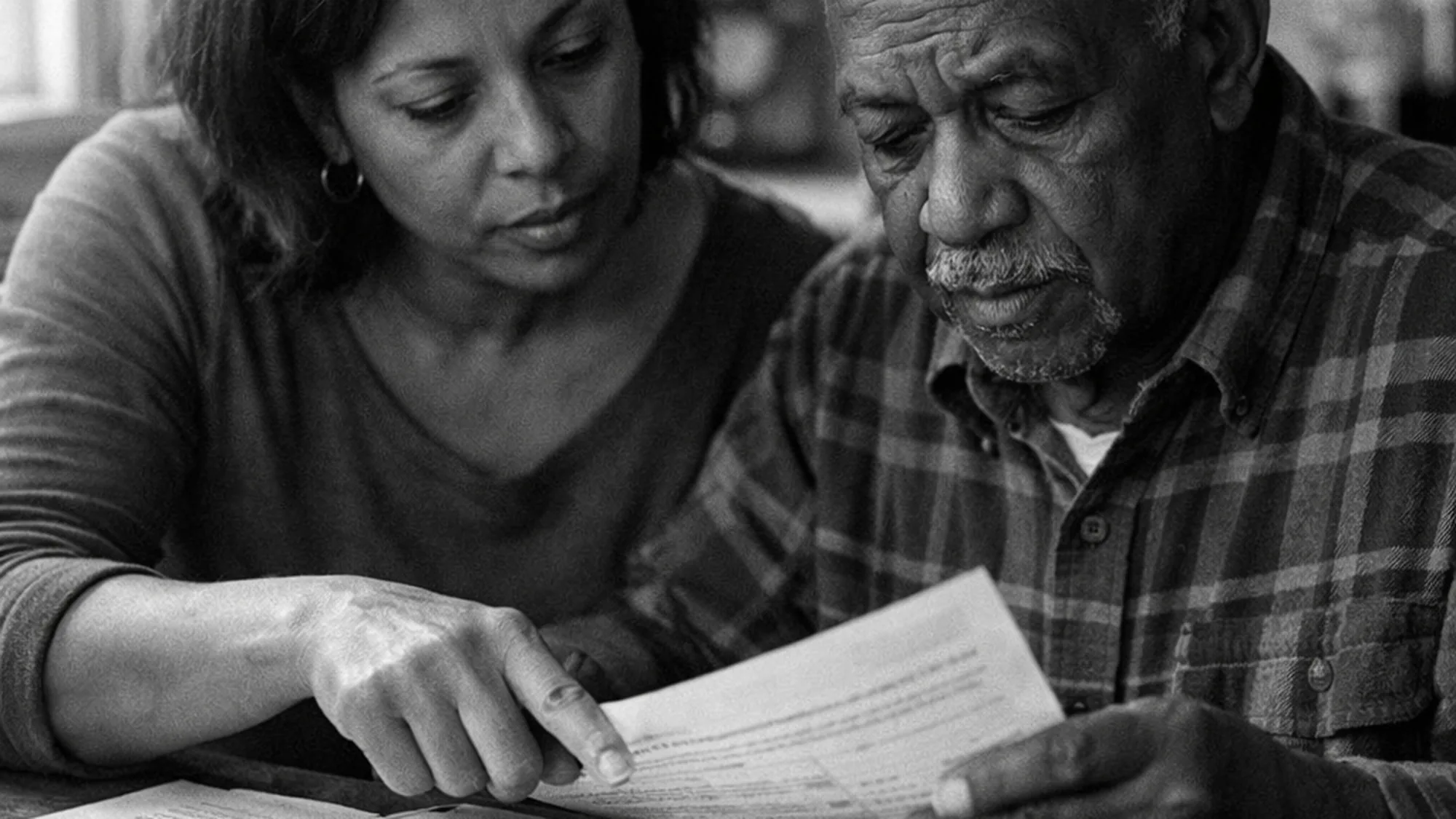
A Black woman in her forties sitting with an older Black man at a kitchen table reviewing medical paperwork, in black and white

In This Article

A 2025 study in The Journals of Gerontology compared how Black and White older adults in the United States actually died. The gaps aren't small, and they aren't about preference.

This is the practical version: the numbers, the history that explains them, and the specific things a family can ask for.

What the research actually found

Researchers compared end-of-life experiences of Black and White decedents using proxy reports from surviving family. Four findings stand out.[1]

  • Hospice: 42% of White decedents received hospice care for three days or more. For Black decedents it was 25%.
  • Wishes met: 84% of White decedents got care that matched what they wanted. For Black decedents, 72%.
  • Where they died: 39% of Black decedents died in a hospital, against 26% of White decedents.
  • Warning: 57% of Black deaths were reported as unexpected, against 40% of White deaths.

Read that last one again. More than half of these deaths arrived with no warning the family recognized. That's the number that drives everything else, because a family that doesn't know death is coming can't plan for it, can't ask for hospice, and can't get anyone's wishes on paper in time.

The study also found something that complicates the picture. Hospice use was associated with better perceived death quality for Black decedents, but it didn't close the gap on whether care matched the person's wishes.[1] Getting more Black families into hospice helps. It isn't sufficient on its own.

Why the mistrust is earned

People sometimes describe Black patients as "reluctant" to accept hospice, as though the reluctance came from nowhere. It didn't.

The United States ran the Tuskegee syphilis study on Black men for 40 years, withholding treatment that existed. Henrietta Lacks's cells were taken and commercialized without her knowledge or her family's consent. Those aren't distant history to the generation now making end-of-life decisions, and the NAACP names that history directly in its own account of hospice disparities.[2]

There's also a live version. Research on pain treatment has repeatedly found Black patients undertreated for pain compared with White patients presenting the same way. When a system has under-treated you your whole life, a program built on declining aggressive treatment is a reasonable thing to be suspicious of.

The practical consequence: a family that says no to hospice may be saying no to the institution, not to comfort. Those are different objections and they need different answers.

What hospice is, and what it costs

Hospice is comfort-focused care for someone expected to live six months or less if the illness runs its usual course. It's mostly delivered where the person already lives.[4]

What people get wrong about it:

  • It isn't a building. Most hospice happens at home.
  • It isn't giving up. You can leave hospice. If someone improves or wants to try treatment again, they can revoke it and go back.
  • It isn't only the last week. Six months is the eligibility window. Most families enroll far later than they could have.
  • It's covered. The Medicare hospice benefit covers the care, the equipment, the medications for the terminal illness, and the visits.[3]

Cost is the objection that usually turns out to be wrong. Under Medicare, hospice is covered. Nurse visits, a hospital bed, oxygen, medications related to the illness, and someone to call at 2am are part of the benefit.[3] We cover the rest in hospice: what nobody tells you.

What to ask for, and when

The single highest-value move is asking earlier than feels necessary, because the data says the warning often doesn't come.

Ask for palliative care now, not hospice later. Palliative care is symptom and comfort care that runs alongside treatment meant to cure. You don't have to be dying and you don't have to give anything up.[4] It's the least loaded door into the same expertise. The difference is laid out in palliative care vs hospice.

Questions worth asking a doctor out loud:

  • "Would you be surprised if he died in the next year?" Clinicians answer this one honestly more often than they volunteer a prognosis.
  • "What does the last part of this illness usually look like?"
  • "Is she eligible for palliative care today?"
  • "If we wanted hospice, who makes that referral and how long does it take?"
  • "What are we doing about her pain, and what's the plan if it gets worse?"

If pain is being minimized, say so plainly and write down who you told and when. A record changes conversations.

You can also ask for a hospice referral yourself. Families often wait to be offered.

The paperwork that protects you

The gap in wishes being honored, 72% against 84%, is partly a paperwork gap.[1] Verbal wishes get overridden. Documents get followed.

Three things, in order of how much they matter:

  1. A healthcare proxy. One named person with legal authority to decide when the patient can't. Without it, a hospital may default to whoever's loudest or to a next of kin who wasn't the closest person. Start at the advance directive hub.
  2. An advance directive. Written instructions on what treatment you want and don't. Requirements vary by state, and your state's rules are in the state guides.
  3. Whoever needs a copy has a copy. A directive in a drawer does nothing. The proxy, the doctor, and the hospital all need one.

None of this costs money and all of it goes faster than people expect.

What this isn’t

This isn't an argument that Black families are doing something wrong. The 2025 study found Black proxies reported higher perceived death quality than White proxies, 6.1 against 5.1 on a ten-point scale, even with worse access on every structural measure.[1] Families are doing a great deal with less.

The gaps are in access, referral, warning, and whether a stated wish gets followed. Those are system failures. What an individual family can control is narrower: ask earlier, get the proxy named, get it in writing, and put the request on the record.

If you want to work through it with people who've been there, death cafes and death salons covers the rooms built for exactly that.

Common questions

Why do fewer Black patients use hospice?

Access, referral patterns, and earned mistrust all contribute. A 2025 study in The Journals of Gerontology found 25% of Black decedents received hospice for three or more days against 42% of White decedents. The NAACP points to historical abuses including the Tuskegee syphilis study and the taking of Henrietta Lacks's cells as sources of that mistrust.

Does hospice cost money?

Under the Medicare hospice benefit, hospice care is covered, including nurse visits, equipment such as a hospital bed, medications for the terminal illness, and after-hours support. Cost is the objection families raise most and it's usually the one that turns out not to apply.

Can you leave hospice once you start?

Yes. A patient can revoke hospice at any time and return to treatment intended to cure. Enrolling isn't permanent and it isn't a one-way door.

What is the difference between palliative care and hospice?

Palliative care is comfort and symptom care that can run alongside treatment meant to cure, at any stage of a serious illness. Hospice is for someone expected to live six months or less and focuses on comfort rather than cure. You can ask for palliative care today without giving anything up.

How do I make sure my parent’s wishes are followed?

Name a healthcare proxy in writing, complete an advance directive that meets your state's requirements, and make sure the proxy, the doctor, and the hospital each hold a copy. Research found Black decedents' care wishes were met 72% of the time against 84% for White decedents, and documentation is the part a family can control.

Sources & References

Research & Citations

All factual claims in this article are sourced from peer-reviewed research, government data, and named institutions. Citations follow APA 7th edition format.

  1. [1]Ross, C., Ratangee, B., Schuler, E., Lian, Z., Damul, B., Carr, D., & Kalousova, L. (2025). Black and White older adults' end-of-life experiences: Does hospice use mitigate racial disparities? The Journals of Gerontology, Series B: Psychological Sciences and Social Sciences. ↗ Source Retrieved July 30, 2026
  2. [2]NAACP. (n.d.). Racial disparities in hospice care. ↗ Source Retrieved July 30, 2026
  3. [3]Centers for Medicare & Medicaid Services. (n.d.). Hospice care coverage. ↗ Source Retrieved July 30, 2026
  4. [4]National Institute on Aging. (n.d.). What are palliative care and hospice care? U.S. Department of Health and Human Services, National Institutes of Health. ↗ Source Retrieved July 30, 2026

Share this story

Post it, or send it straight to the person who needs it. The link goes with it.

Keep Reading

End-of-Life Care

Hospice: What Nobody Tells You Until You're In It

Hospice is one of the most misunderstood parts of end-of-life care. Most families say they wished they'd started it sooner. Here's what it actually is.

9 min read
End-of-Life Care

What Is Comfort Care?

Comfort care means the goal has shifted from curing the illness to keeping the person comfortable, present, and out of pain. Families hear the phrase at the worst moment and rarely get it explained. Here’s what it means, and what it doesn’t.

6 min read
End-of-Life Care

Palliative Care Isn’t Hospice. Stop Confusing Them.

One is comfort care you can get alongside treatment, at any stage of illness. The other requires a terminal prognosis. Confusing the two keeps people suffering longer than they need to.

7 min read
Culture

Death Cafes and Death Salons: Where Strangers Talk About Dying

A room, some strangers, and one subject nobody brings up at dinner. Death cafes have run in 97 countries since 2011. Death salons are the version built for people who need the room to be safer than that. Here's what actually happens in one.

7 min read

The Death Dispatch

More stories like this, weekly.

A newsletter about death you'll actually look forward to reading.