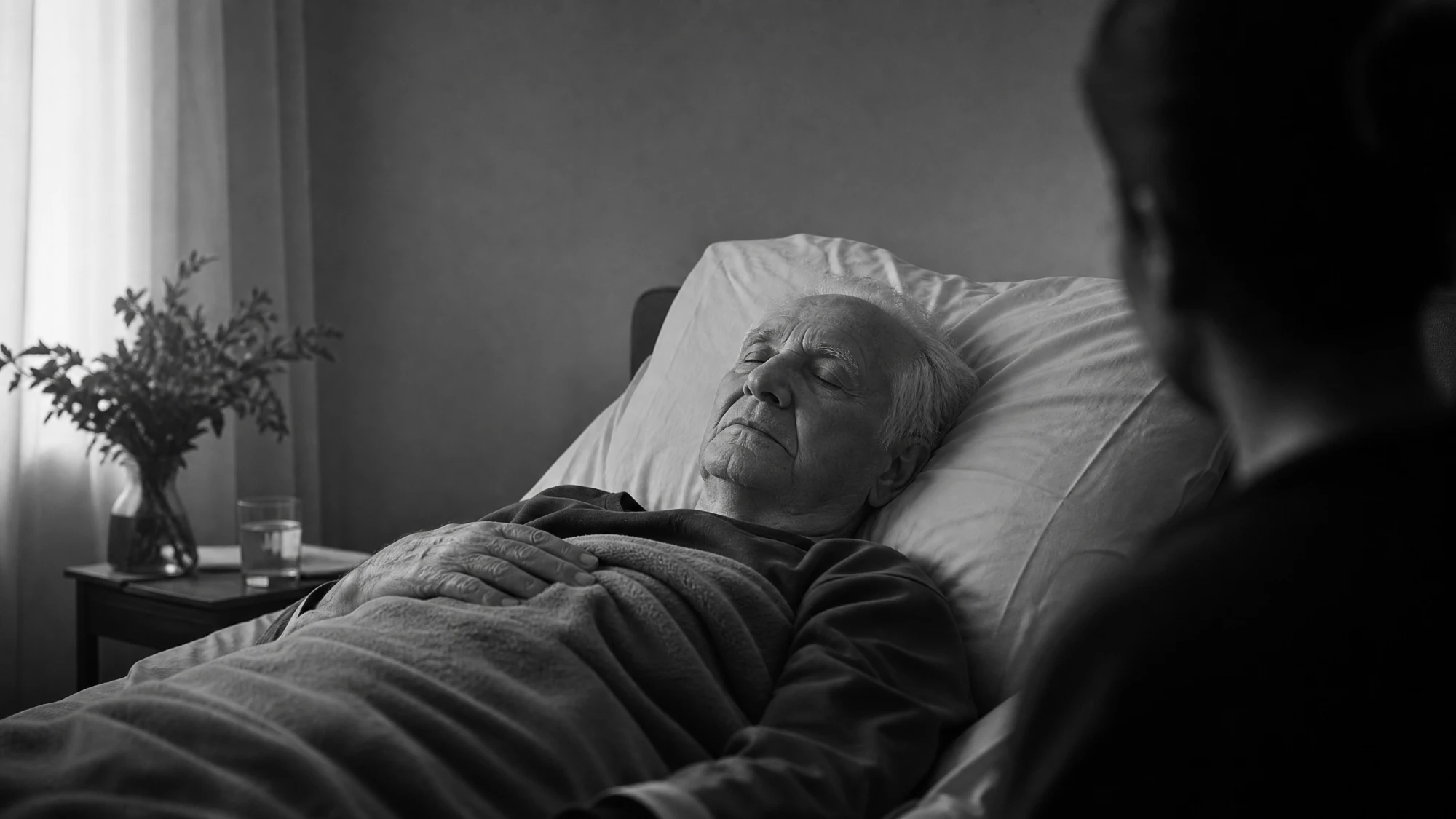
End-of-Life CareJuly 2026 · 7 min read

Breathing Changes and the Death Rattle at the End of Life

Near the end, breathing changes: long pauses, fast shallow breaths, and the wet gurgle called the death rattle. It frightens the room, not the dying person. Here is what each pattern is and what quiets it.

In This Article

Near the end of life, breathing changes, and the changes are loud enough and strange enough to frighten anyone who was not told to expect them. The breaths space out into long pauses, then come fast and shallow. A wet, rattling gurgle sets in, the sound people call the death rattle. Almost all of it distresses the people in the room more than the person doing the breathing.

This page names each pattern you might hear, says what it is, and says plainly whether it hurts. The load-bearing fact: by the time these sounds start, the dying person is usually beyond feeling them. For the wider picture of the last days, read what dying actually looks like.

What are the breathing changes at the end of life?

As death nears, breathing becomes irregular. It can speed up, slow down, and turn shallow. Long pauses open up between breaths, sometimes ten, twenty, thirty seconds or more, and then breathing starts again. Near the very end, the breaths often become slow and shallow, and there may be a wet or rattling sound.[1]

These are all normal signs of the body shutting down. Irregular breathing does not mean the person is struggling or short of air in the way a conscious person would be. It is the automatic breathing system winding down.

What is the death rattle?

The death rattle is a wet, gurgling or rattling sound that comes with breathing in the last hours or days. It happens because saliva and secretions collect in the back of the throat and the person is too weak to swallow or cough them clear. Air moving past the pooled fluid makes the rattling sound.[2]

It is called a rattle because that is what it sounds like: a loose, wet vibration on each breath. It can be quiet or loud. It is one of the most common reasons families at a home death call the hospice line in a panic.

Does the death rattle mean death is near?

Usually, yes. The death rattle typically appears in the last hours to a day or two of life, once the person is deeply unresponsive. It is a sign that they are in the final phase. It is not an exact countdown, and the range varies: some people have it briefly, some for longer.[2]

If it has started, the end is generally close. Gather who wants to be there. For how the overall timing works, see how long the dying process takes.

What is Cheyne-Stokes breathing?

Cheyne-Stokes breathing is a specific end-of-life pattern: cycles of gradually deeper, faster breaths that then fade to shallow ones and stop, followed by a pause with no breathing at all, before the cycle starts again. The pauses can last long enough to make the family think the person has died, and then a breath comes.[1]

It is caused by the brain's breathing control slowing and losing its steady rhythm as the body shuts down. It looks and sounds alarming. It is a normal part of dying and does not mean the person is in distress.

What is agonal breathing?

Agonal breathing is the name for the irregular, reflexive gasps that can happen very near the end and in the moments around the last breath. They can look like gasping, gulping, or a long sigh. The word comes from "agony," but that is misleading: these are automatic brainstem reflexes, not a sign the person is suffering.[1]

By this point the person is unresponsive and past awareness. Agonal breaths are the body's last automatic movements, not the person fighting for air.

What is the last breath before death called?

There is no single clinical name for "the last breath." It is often a final agonal breath: a last reflexive gasp or a long, slow sigh. What families most need to know is that a final breath or two can come after a long pause that looked like the end, sometimes a minute or more later.[1]

That delayed last breath startles people badly when no one warned them. It is a reflex, not the person coming back or being in pain. Knowing it can happen is the difference between a shock and an expected moment.

Does the death rattle distress the dying person?

No. This is the fact worth holding onto. By the time the death rattle starts, the person is deeply unresponsive and, as far as anyone can tell, not aware of the sound or bothered by it. The noise upsets the family, not the patient.[2]

It is not the same as choking or gasping for air. The person is not drowning and is not fighting to breathe. It is fluid the body can no longer clear, moving with breath that is happening automatically.

What can be done about noisy breathing?

The first and simplest step is repositioning: turning the person onto their side or raising the head of the bed can let the pooled secretions drain and quiet the sound. Keeping the mouth gently moistened helps. The hospice team may also give medication to dry up the secretions.[1]

Suctioning is usually avoided, because it can distress the body and the secretions come right back. If the sound is upsetting you, tell the hospice nurse; they can adjust care and, just as important, remind you that the person is comfortable. If your person is dying at home, we cover the final hours in dying at home, what it takes.


This page is death education, not medical advice. The breathing sounds of the last days are normal and, by the time they start, do not distress the dying person. Your hospice or palliative team can treat the sound and answer your questions. For where these facts come from, see our Sources and Methodology.

Sources & References

Research & Citations

All factual claims in this article are sourced from peer-reviewed research, government data, and named institutions. Citations follow APA 7th edition format.

  1. [1]National Institute on Aging. (2022). Providing care and comfort at the end of life. U.S. Department of Health and Human Services, National Institutes of Health. ↗ Source 2026-07-22
  2. [2]Hospice Foundation of America. (n.d.). Signs of approaching death. ↗ Source 2026-07-22
ShareX / Twitter

Keep Reading

End-of-Life Care

What Dying Actually Looks Like

The final days follow a pattern hospice nurses know by heart. The breathing changes. The eating stops. Here's what's normal, what's not, and why knowing the difference matters for the people in the room.

9 min read
End-of-Life Care

Mottling and Skin Changes Before Death: What It Looks Like

The blotchy purple marbling on a dying person's feet and hands is called mottling. It looks alarming and it does not hurt them. Here is what it is, where it starts, what it means for timing, and how it looks on darker skin.

6 min read
End-of-Life Care

How Long Does the Dying Process Take?

The honest answer is a range, not a clock. Here are the real timeframes hospice families ask about: the long decline, the last weeks, the active dying phase, and how long after the death rattle or after eating stops.

7 min read
End-of-Life Care

Everyone Wants to Die at Home. Almost Nobody Plans for It.

Dying at home takes equipment, caregivers, and a plan for the moment itself. Including who you call and who you don't. Here's what it actually takes to make it happen.

9 min read

The Death Dispatch

More stories like this, weekly.

A newsletter about death you'll actually look forward to reading.