CultureJuly 2026 · 9 min read

Death Cleaning: The Swedish Art of Decluttering Before You Die

Discover döstädning, the Swedish practice of decluttering your life before death, and how this act of love eases the burden on your family.

Death Cleaning: The Swedish Art of Decluttering Before You Die

In This Article

The Uncomfortable Truth: You're Going to Die

Let's be blunt. It pairs naturally with digital legacy planning, which addresses the accounts and files that exist only online. And with what happens to social media accounts after you die. You're going to die. We all are. It's the one universal truth, yet we spend a remarkable amount of energy pretending it isn't happening. We use euphemisms like "passed away" or "lost" to soften the blow, as if avoiding the word "death" will somehow make it less real. But at MORTL, we face facts head-on. And one of those facts is that your death, whenever it comes, will leave a mess behind. Not just emotional, but physical. A lifetime of accumulated stuff that someone else will have to sort through, often at the worst possible time.

This isn't about morbidity; it's about reality. It's about acknowledging that your existence, however vibrant, will eventually cease, and the physical remnants of that existence will become someone else's problem. In Sweden, they have a refreshingly practical, profoundly loving approach to this reality: döstädning. Pronounced "doo-stad-ning," it literally translates to "death cleaning." It's not about scrubbing your floors before you die; it's about decluttering your life, thoughtfully and intentionally, so that your death doesn't become an overwhelming burden for those you leave behind. It's an act of radical kindness, a final gift wrapped in practicality, ensuring your loved ones can focus on grieving, not on your junk.

A Swedish Death Cleaning Checklist

Death cleaning fails when you start with the photo albums. Work room by room, in this order, from lowest attachment to highest. Every item gets one of three verdicts: keep, give away, or discard.

1. Garage, attic, and basement: Start here. These rooms hold things you forgot you owned, which makes the decisions easy. Anything broken or redundant goes first.

2. Spare room and storage closets: Clear the linen closet of duplicate towels and bedding. Open the boxes you have not touched since your last move. If you did not miss it, you do not need it.

3. Kitchen: Keep the plates, pans, and gadgets you actually use. Donate the rest. No one wants your second blender.

4. Bedroom and wardrobe: Clothes you have not worn in a year get donated. Jewelry and watches are giveaway candidates: pick the person, hand it over, and tell them the story while you still can.

5. Home office and paperwork: Pull your will, insurance policies, deeds, and financial records into one clearly labeled place. Shred what is expired. Tell one trusted person exactly where that folder is.

6. Your digital life: Write down your accounts and passwords, and what should happen to each one: delete, memorialize, or transfer. Your family cannot guess their way in.

7. Living areas and shelves: Do the giveaway pass. Any object a specific person would cherish, give it to them now and watch them receive it.

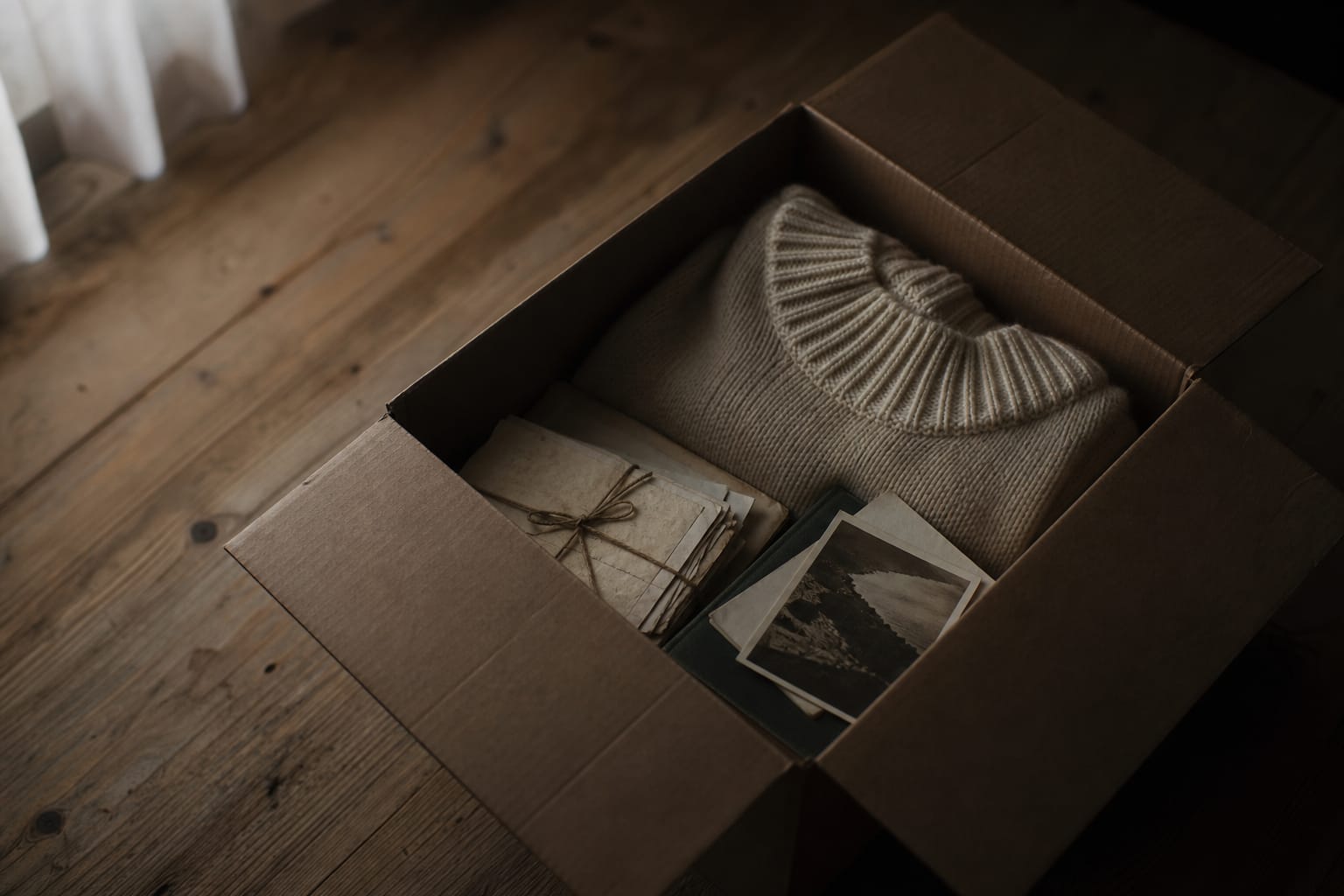
8. Photos, letters, and heirlooms: Last, always. By now you have practice. Keep what is irreplaceable, label who gets what, and discard the duplicates. Your family wants memories of you, not boxes they cannot bring themselves to open.

Do one room, then stop. Death cleaning is measured in months, not weekends. You are finished when someone who has never set foot in your home could find your will, your passwords, and the things that mattered to you within an hour.

What Swedish Death Cleaning Means

Swedish death cleaning is the English name for döstädning. The word combines , death, and städning, cleaning. It means sorting your possessions while you are alive so your family does not have to do it after you die. Margareta Magnusson, a Swedish artist, named the practice for English-speaking readers in her book The Gentle Art of Swedish Death Cleaning [1]. Her point is blunt: you know your stuff better than anyone else ever will. Deal with it while you can.

Death cleaning is not a weekend purge. It is a slow, deliberate reduction of what you own, done item by item, with the end of your life as the openly stated reason. That honesty is what separates it from ordinary decluttering. You are not tidying. You are deciding, in advance, who deals with what. The idea has spread well beyond Sweden: in 2023, Peacock released The Gentle Art of Swedish Death Cleaning, a reality series based on Magnusson's book and narrated by Amy Poehler [5].

Döstädning: More Than Just Decluttering

Forget Marie Kondo for a moment. While her methods are about sparking joy, döstädning is about easing grief. It's a process, typically undertaken by older adults, to organize their homes and possessions, deciding what to keep, what to give away, and what to discard. But unlike a typical spring clean, the underlying motivation is different. It's about minimizing the practical and emotional burden on your loved ones after you're gone. It's about curating your legacy, not just your living space. It's a way to face your own mortality and spare your family the mess.

Think about it: when someone dies, their family is hit with grief, paperwork, and often a house full of stuff. Imagine trying to process your profound sadness while simultaneously sifting through decades of forgotten trinkets, old bills, sentimental items, and sheer junk. It's a monumental task, often taking months, sometimes years. And it costs money. Probate fees, storage units, estate lawyers – the financial burden can be significant. The average cost of settling an estate in the US can range from thousands to tens of thousands of dollars, with legal fees alone for estates under $500,000 often around $4,000 [1]. The process itself can take an average of 16 months, and even simple estates typically take at least six months [2] [3]. This isn't just an inconvenience; it's an added layer of stress and expense during an already devastating time. Döstädning aims to mitigate this chaos, offering a path to a more organized departure.

Starting the Conversation and the Process

So, how do you begin death cleaning? The first, and often hardest, step is to start the conversation. Not just with your family, but with yourself. Acknowledge your mortality. Understand that this isn't about preparing for immediate death, but about living a more organized, less burdened life now, and ensuring a smoother transition for your family later. Talk to your loved ones. Explain your intentions. It might be uncomfortable at first, perhaps even met with resistance or denial, but framing it as an act of love, a way to protect them from unnecessary stress and difficult decisions, can help. Be direct: "I'm doing this so you don't have to deal with my crap when I'm dead."

Once the conversation is open, the physical process can begin. The Swedish approach suggests starting with the least sentimental items first. Tackle the attic, the garage, the spare room – places where forgotten items tend to accumulate. This builds momentum and confidence before you dive into more emotionally charged possessions like old photographs, letters, or heirlooms. The key is to be ruthless, but also thoughtful. Ask yourself: "Will anyone else be happier if I keep this?" or "Does this truly represent the legacy I want to leave?" Remember, your loved ones want memories of you, not just your stuff. They want to remember you, not the burden of your possessions. This isn't about erasing your past; it's about curating it for the future.

What to Keep, What to Discard, What to Give Away

This is the hard part. The decision-making can be tough, but döstädning offers a framework. Keep items that hold genuine, irreplaceable sentimental value, or those that are truly useful. Discard anything broken, redundant, or that no one else would want. Be honest with yourself: that collection of broken garden gnomes isn't going to be a cherished family heirloom. Give away items that you know a specific person would cherish. This is where the "act of love" truly shines. Imagine the joy of giving a beloved piece of jewelry to a grandchild, or a collection of books to a friend who will appreciate them, while you're still alive to witness their pleasure and share the story behind the item. This isn't just decluttering; it's distributing love and memories intentionally.

Consider the practicalities. Important documents – wills, insurance policies, financial records – should be organized, clearly labeled, and their location communicated to a trusted individual. Don't leave your family hunting through the house for vital paperwork. Digital assets are also crucial. What happens to your social media accounts, your email, your online photos, your cryptocurrency? These need to be addressed as part of your döstädning. Leaving a clear roadmap for your digital legacy is just as important as sorting through physical possessions. Don't leave your family guessing or struggling to access vital information, potentially locking them out of your digital life forever. Provide passwords, access codes, and clear instructions for everything.

The Greatest Gift You Can Give Your Family

Ultimately, döstädning is not about death; it's about life. It's about living intentionally, unburdened by excess, and with a clear understanding of what truly matters. By undertaking this process, you're not just decluttering your home; you're decluttering your mind and, most importantly, you're giving your family an invaluable gift. You're sparing them the agonizing task of sifting through your life's detritus while they are grappling with your absence. You're allowing them to grieve, to remember, and to celebrate you, without the added stress of managing your possessions. It's a profound act of love, a final gesture of care that says, "I thought of you, even after I'm gone."

It ensures that your memories, not your clutter, are what remain prominent. It transforms a potentially overwhelming burden into a manageable, even meaningful, process for those you cherish most. It's a way to control your narrative, to ensure your story is told through the things you chose to keep, not the things you simply accumulated. It's about taking responsibility for your own footprint, both during life and after death, and showing genuine consideration for those who will carry on without you. It's the most considerate kind of preparation there is.

What You Can Do Right Now

1. Acknowledge it: Accept that you will die, and that leaving a mess for your loved ones is not ideal. This isn't morbid; it's responsible. It's the adult thing to do.

2. Start the conversation: Talk to your family. Explain döstädning as an act of love, not a premonition of doom. Gauge their comfort levels and invite them into the process. Be direct and honest about your motivations.

3. Begin with the easy stuff: Don't dive into your grandmother's antique photo albums first. Start with the garage, the junk drawer, the overflowing linen closet. Build momentum and confidence before tackling the truly sentimental.

4. Be ruthless, but thoughtful: Ask yourself, "Does this serve a purpose? Does it bring joy to someone else? Does it represent my true legacy?" If not, let it go. Your sentimental attachment doesn't automatically transfer to your heirs.

5. Organize important documents: Create a clear, accessible system for your will, financial information, insurance policies, and passwords. Tell a trusted person where to find it. Don't make them guess.

6. Address your digital legacy: Make a plan for your online accounts. Who will manage them? What should be deleted, and what should be preserved? Leave clear instructions and access.

7. Give gifts now: If there are items you know someone would love, give them away while you're alive. Experience the joy of giving and see the appreciation firsthand. It's far more impactful than them finding it in a dusty box after you're gone.

Sources & References

Research & Citations

All factual claims in this article are sourced from peer-reviewed research, government data, and named institutions. Citations follow APA 7th edition format.

  1. [1]Magnusson, M. (2017). *The gentle art of Swedish death cleaning: How to free yourself and your family from a lifetime of clutter*. Scribner.
  2. [2]Kondo, M. (2014). *The life-changing magic of tidying up: The Japanese art of decluttering and organizing*. Ten Speed Press.
  3. [3]American Bar Association. (2023). *Estate planning basics*. ↗ Source Retrieved July 2, 2026
  4. [4]Caring.com. (2024). *Wills and estate planning study*. ↗ Source Retrieved July 2, 2026
ShareX / Twitter

Keep Reading

Grief

"Nobody Told Me There Would Be This Much Paperwork"

What actually happens in the 72 hours after someone dies. And why nobody prepares you for it.

8 min read
Digital Legacy

What Happens to Your Digital Life When You Die

Your email, photos, social media, crypto, and subscriptions don't just disappear. Here's what actually happens. And what you can do about it now.

9 min read
Planning

7 Estate Planning Myths That Are Costing People Money

"I'm too young." "I don't have enough assets." "My family will figure it out." These are the myths that leave families with nothing but a mess.

9 min read
Planning

The Advance Directive: What It Is, Why You Need One, and How to Get It Done

An advance directive is the single most important document most people never write. Here's everything you need to know to actually complete one.

11 min read
Culture

Why Americans Are Terrified of Death (And What It's Costing Them)

A deep dive into death avoidance culture and the $20 billion industry that profits from it.

10 min read
Planning

Pet Trusts: How to Make Sure Your Animals Are Taken Care Of After You Die

Ensure your beloved pets are cared for after your death with a pet trust, covering everything from funding to finding a new home.

10 min read

The Death Dispatch

More stories like this, weekly.

A newsletter about death you'll actually look forward to reading.