End-of-Life CareJuly 2026 · 8 min read

Dying of Old Age: What It Actually Looks Like

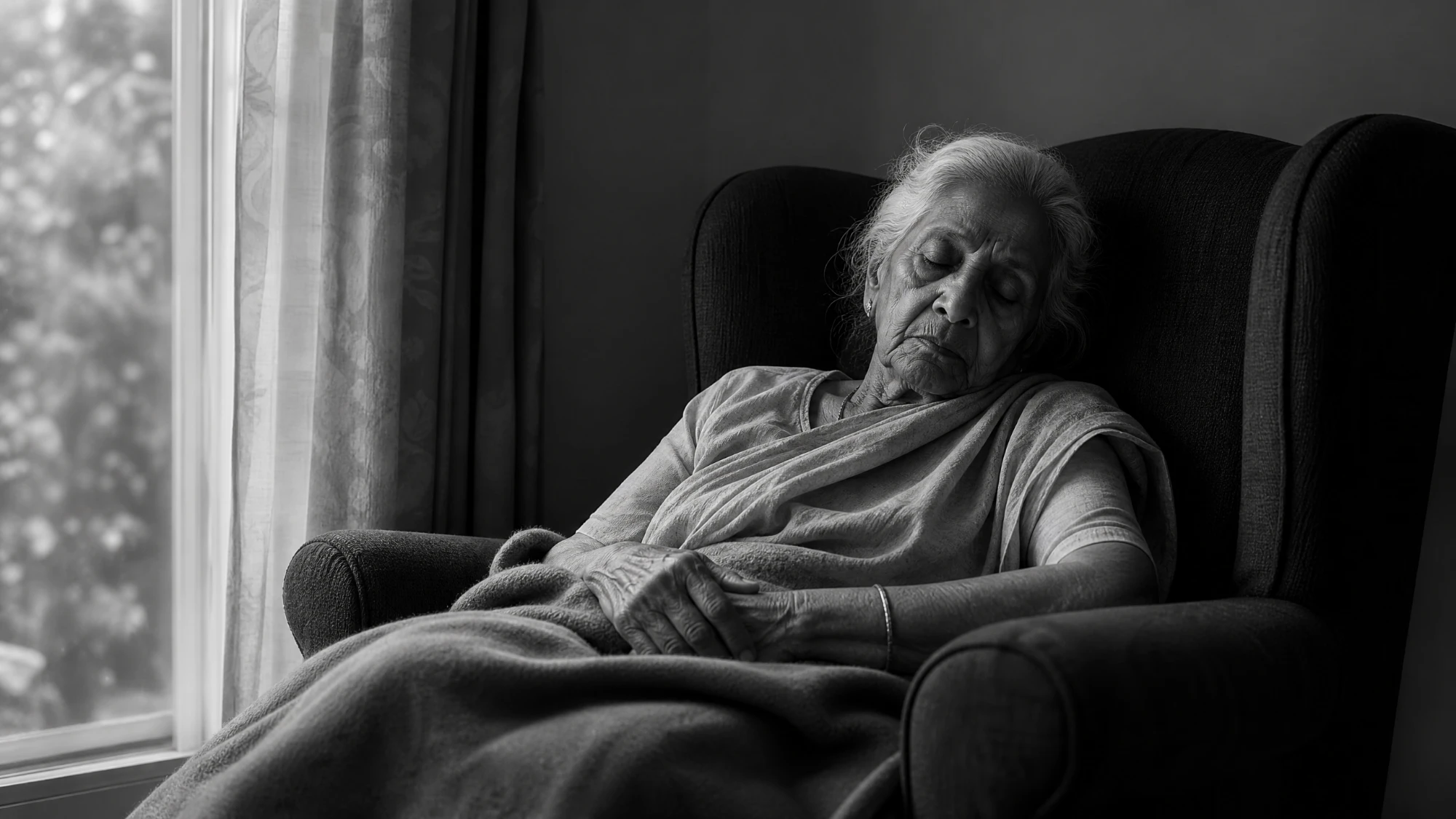
"Old age" is not a cause of death by itself. What people mean is a slow, whole-body wind-down: eating less, sleeping more, pulling inward, until the body stops. Here are the real signs and how it differs from dying of a disease.

In This Article

People say someone died of old age, but no death certificate says that. What they are describing is real all the same: a very old body slowing down across every system at once, until it stops. It usually looks like less eating, more sleeping, and a steady pulling inward over weeks to months. Here is what it actually looks like, and how it differs from dying of a named disease.

The signs below overlap with dying from any cause, covered in what dying actually looks like. This page is about the specific, slow version that comes with great age.

What does dying of old age look like?

Dying of old age looks like a slow, whole-body wind-down: the person eats and drinks less, sleeps more and more, grows physically weaker, withdraws from the world around them, and gradually spends more time unresponsive until the body stops. It is usually gradual, measured in weeks to months, not a sudden event.[1]

There is often no single dramatic decline. Instead the person becomes a little less present each week, until one day the balance tips and the last days arrive.

Is old age a cause of death?

Old age is not, by itself, a medical cause of death, and doctors are not allowed to write it as one. What is really happening is that in a very old body, multiple systems, the heart, kidneys, lungs, brain, and immune system, are all failing gradually at once, and eventually one of them stops. The death certificate names the specific failure; "old age" is the everyday word for the whole pattern.[1]

So when a family says a 95-year-old "died of old age," they are usually right about the experience even though the paperwork lists something more specific, like heart failure or pneumonia.

What are the signs of death from old age?

The signs of death from old age, in the final weeks and days, include a sharp drop in appetite and thirst, sleeping most of the day, confusion or withdrawal, weakness that confines the person to bed, cool and mottled hands and feet, changes in breathing, and long stretches of unresponsiveness.[2]

These are the same signs the body shows when dying from most causes. In old age they tend to arrive slowly and stack up over time rather than appearing all at once.

What are the near-death signs in the elderly?

In the last days, the near-death signs in an elderly person are: almost no food or fluid, deep sleep or unconsciousness most or all of the time, irregular breathing with long pauses, sometimes a wet rattling sound, cool and bluish or mottled skin starting at the feet and hands, and very little urine.[1]

Some older adults also become briefly restless or agitated, and some have a short surge of alertness or energy a day or two before death. Both are recognized, normal parts of the end and are covered in what dying actually looks like.

How is dying of old age different from dying of a disease?

Dying of old age is usually slower and more diffuse than dying of a specific disease. A disease like advanced cancer or organ failure often drives a more predictable, sometimes faster decline with its own symptoms. Old-age dying is a gradual failure of everything at once, without one dominant illness setting the pace, so it can stretch out over months of slow fading.[1]

This is part of why it is so hard for families to time. There is rarely a clear diagnosis-to-death arc; there is just a person getting quietly frailer until the end is close.

What is "failure to thrive" at the end of life?

"Failure to thrive" is the clinical term for an older adult declining across the board, losing weight, appetite, strength, and interest, without a single disease that fully explains it. Doctors use it to describe the pattern families call dying of old age. It often signals that a person is approaching the end of life and may be a reason to consider hospice.[2]

It is not a moral failing or a lack of effort by anyone. It is a recognized end-of-life trajectory, and naming it can help a family shift from chasing tests to focusing on comfort.

How long does dying of old age take?

Dying of old age usually takes weeks to months of gradual decline, then a final phase of days once the person stops eating and drinking and sleeps most of the time. There is no fixed timeline, and it varies widely from person to person, but the slow version measured in months is common in great age.[1]

For how the final stretch is timed once it begins, see how long the dying process takes.

Does dying of old age hurt?

Dying of old age is not usually painful in itself. The slow shutdown, less appetite, more sleep, and fading awareness, is not a painful process, and the body's own chemistry tends to blunt discomfort near the end. Any pain that does come, usually from an underlying condition rather than from aging itself, can almost always be controlled with hospice or palliative care.[1]

Stopping food and fluids near the end does not cause the suffering people fear; a body shutting down does not experience hunger and thirst the way a healthy one does.

How do you care for someone dying of old age?

You care for someone dying of old age by shifting the goal from fixing to comfort: keeping them clean, warm, and out of pain, offering food and fluid without forcing it, moistening the mouth, and simply being present. A hospice team can guide all of this and manage symptoms at home.[2]

Assume they may still hear you even when they cannot answer, and talk to them normally. For the practical side of a home death, read dying at home, what it takes, and what hospice actually does.


This page is death education, not medical advice. If an older person is declining, their doctor or a hospice team can tell you what is happening and how to keep them comfortable. For where these facts come from, see our Sources and Methodology.

Sources & References

Research & Citations

All factual claims in this article are sourced from peer-reviewed research, government data, and named institutions. Citations follow APA 7th edition format.

  1. [1]National Institute on Aging. (2022). Providing care and comfort at the end of life. U.S. Department of Health and Human Services, National Institutes of Health. ↗ Source 2026-07-23
  2. [2]Hospice Foundation of America. (n.d.). Signs of approaching death. ↗ Source 2026-07-23
ShareX / Twitter

Keep Reading

End-of-Life Care

What Dying Actually Looks Like

The final days follow a pattern hospice nurses know by heart. The breathing changes. The eating stops. Here's what's normal, what's not, and why knowing the difference matters for the people in the room.

9 min read
End-of-Life Care

How Long Does the Dying Process Take?

The honest answer is a range, not a clock. Here are the real timeframes hospice families ask about: the long decline, the last weeks, the active dying phase, and how long after the death rattle or after eating stops.

7 min read
End-of-Life Care

Hospice: What Nobody Tells You Until You're In It

Hospice is one of the most misunderstood parts of end-of-life care. Most families say they wished they'd started it sooner. Here's what it actually is.

9 min read
End-of-Life Care

What Happens to the Body After Death

The heart stops and the body starts changing right away: it pales, cools, stiffens, and then decomposes. Here is what happens minute by minute and day by day, in plain language, without the horror-movie version.

8 min read

The Death Dispatch

More stories like this, weekly.

A newsletter about death you'll actually look forward to reading.