Grief

When a Student or Teacher Dies: A School Bereavement Response Plan

What a school does in the first hours, the first week and the months after a student or staff member dies: who tells whom, what the letter home says, how to support grieving students, and how to plan a memorial.

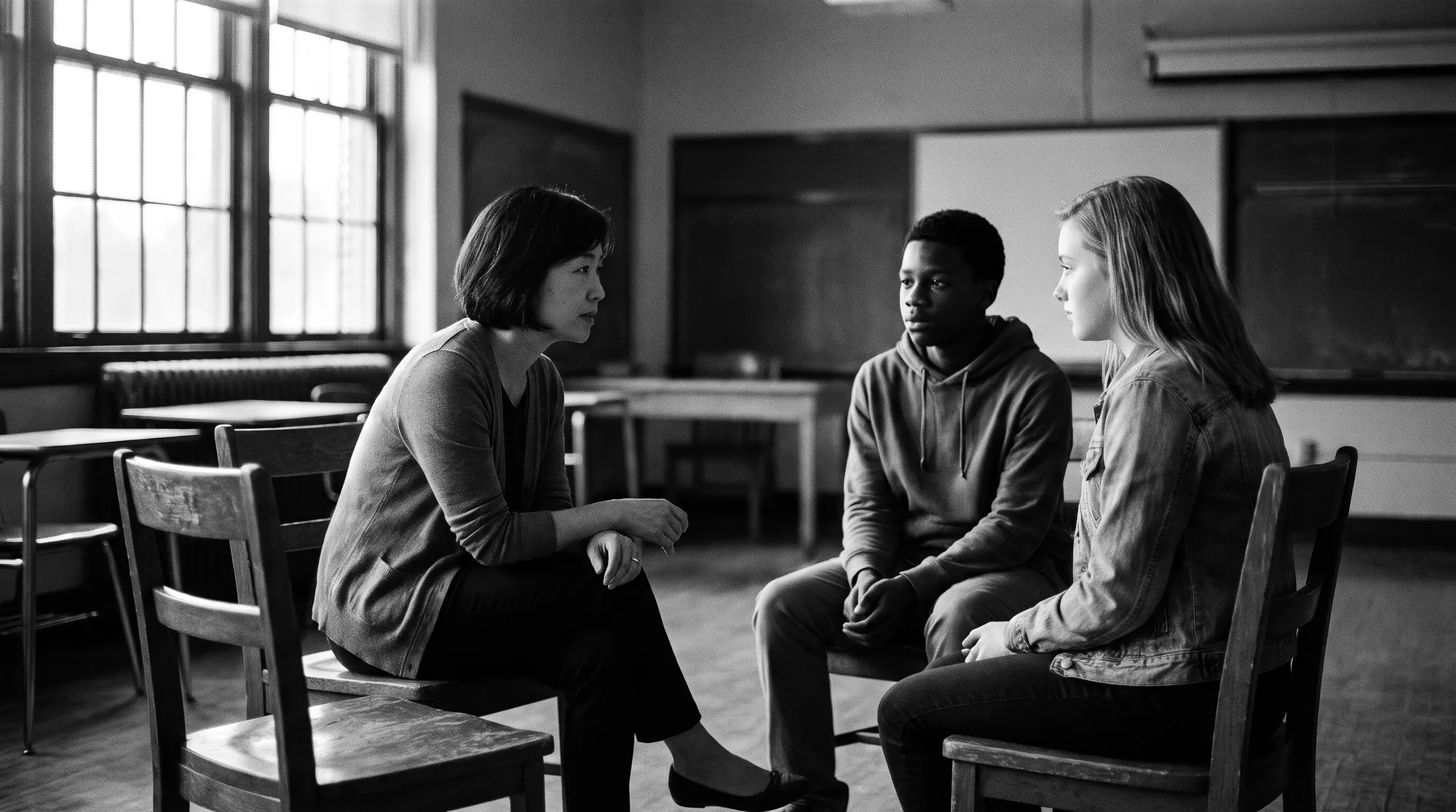
A teacher sits in a circle of chairs with two students in an empty classroom, talking quietly, in black and white

When a student or a staff member dies, the school’s first job is to tell staff, students and families what happened, accurately and fast. The National Association of School Psychologists’ guidance is plain: share the facts with staff, students and families, keep them updated, and give teachers clear guidelines for what to say and where to send students who need more help.[1]

This is that plan, in the order a school needs it.

The first hours: confirm, then tell staff

  1. Confirm the facts with the family or the authorities before anything is shared.
  2. Tell staff first, in a meeting or a bulletin, with the facts and what to say. Teachers need guidelines for sharing the news with their students and a referral procedure for students who need more support.[1]
  3. Ask the family what they want shared, and honor it.
  4. Keep updating. Staff, students and parents should get regular updates as facts become known.[1]

Telling students

Tell students through class announcements and meetings.[1] NASP’s guidance for those conversations:[1]

  • Be simple and straightforward, in terms that fit the students’ age.
  • Use the words “death,” “die” and “dying.” Euphemisms such as “went away” or “passed away” can confuse children, especially young ones.
  • Be brief and patient. Expect the same question more than once.
  • Listen, acknowledge feelings, and don’t judge.
  • Keep the routine as normal as you can.

The letter to families

Send a letter or email to every family, on school letterhead.[1] NASP lists what it should carry:[1]

  • The facts about the death, to stop rumors
  • The range of feelings and reactions children may have
  • How to talk with their child about the death
  • Signs that a child may need counseling
  • How to reach the school with questions or to ask for help for a child
  • Where to find community resources

Support in the classroom, by age

Grief looks different at different ages, and NASP describes what to expect:[2]

  • Preschool: regressive behaviors, talking less, more anxiety. Young children may believe death is reversible, so skip the euphemisms and expect repeated questions.[1][2]
  • Elementary: lower grades, attention and attendance; irritability, aggression or disruptive behavior; stomachaches and headaches; trouble sleeping or eating; guilt, depression and anxiety. Children under eight may believe they could have prevented the death.[1][2]
  • Middle and high school: lower grades and attendance, withdrawal, risky behavior or substance use, trouble with friends, nightmares, flashbacks, numbness or depression.[2]

Give students more than one way to express grief, such as writing, drawing or music, and don’t pressure the ones who don’t want to talk at school.[1] Some students with developmental disabilities show grief through more frustration, physical complaints or self-stimulating behavior, and limited communication doesn’t mean they aren’t affected.[1]

Students who need closer attention

NASP singles out students who recently had a death or a major change in their own lives, students who saw the death happen, and students who already have emotional problems.[1] A student needs more support when they show a marked loss of interest in daily activities, changes in eating or sleeping, a wish to be with the person who died, fear of being alone, a big drop in schoolwork, more physical complaints, or a change in attendance.[2]

Any student who talks about harming themselves or someone else goes to the school’s mental health staff right away.[1]

Memorials

Memorials let students, staff and the community grieve together, and they can teach students what to expect at a memorial service.[3] NASP’s memorial guidance comes down to a few rules:[3]

  • Do no harm. Gathering sites have to be safe. Don’t let students gather at a crash site next to a busy road, and keep candles away from flowers, stuffed animals and letters.
  • Make it optional. Don’t force students to attend or to talk before they’re ready.
  • Offer choices. Different activities let different students take part in their own way.
  • Go slow on permanent memorials. Plaques, stones and named spaces raise questions about retraumatizing students, maintenance, cost and long-term policy. One large high school district doesn’t let any campus space be permanently named after a person, which steers memorials toward renewable or living ones.

If the death was a suicide

A suicide death needs its own care in how it’s communicated, and the American Foundation for Suicide Prevention and the Suicide Prevention Resource Center publish After a Suicide: A Toolkit for Schools for it. Its second edition covers communicating with the school community, helping students cope, working with parents and the community, social media, memorialization and contagion.[4]

When the school says the death was a suicide, use the words “died by suicide,” never describe the method or the place, and don’t speculate about why. A suicide is never the result of one thing.

Keep memorials after a suicide temporary or living, such as a donation to a suicide prevention program. NASP’s memorial guidance says not to make a permanent memorial or hold an assembly after a student dies by suicide, so the death isn’t glorified, because that can raise the risk for other students.[3]

Put the 988 Suicide and Crisis Lifeline in every message to students and families. Anyone, a student or an adult, can call or text 988 to talk to someone, any time. You don’t have to be in crisis to call.
The months after

NASP tells schools to watch for anniversaries, birthdays and milestones, which can affect students months or years later,[2] and to help bereaved students find a peer support group.[1] Put the dates on the school calendar, and tell next year’s teachers which students were close to the person.

Where MORTL fits

MORTL’s plans for schools give the front office the same tools an HR team gets, including the first 48 hours checklist and the manager card, and give everyone on payroll MORTL Premium all year. For the grown-ups at home, how to talk to kids about death is the companion piece to the letter home.

Common questions

What should a school do first when a student dies?

Confirm the facts with the family or the authorities, then tell staff before students hear rumors. Give teachers guidance on what to say and how to refer students who need more support, and send a letter home to every family.

What goes in a letter to parents about a death?

The facts about the death, to stop rumors; the range of reactions children may have; how to talk with their child about it; signs a child may need counseling; how to reach the school; and community resources.

How should teachers talk to students about a death?

Simply and directly, in words that fit the students’ age. Use the words “died” and “death” instead of euphemisms like “passed away,” keep the routine as normal as possible, and let students ask the same question more than once.

Should a school hold a memorial?

Often, yes, and memorial activities can help students grieve together. Make attendance optional, keep any gathering site safe, give students a choice of activities, and plan carefully before anything permanent. After a suicide, keep it temporary or living, with no permanent memorial and no whole-school assembly.

What if the death was a suicide?

Use the words “died by suicide,” never describe the method, and don’t speculate about why. AFSP and the Suicide Prevention Resource Center publish a free toolkit for schools, and every message to students and families should include the 988 Suicide and Crisis Lifeline.

Sources & References

Research & Citations

All factual claims in this article are sourced from peer-reviewed research, government data, and named institutions. Citations follow APA 7th edition format.

  1. [1]National Association of School Psychologists. (2015). Addressing grief: Tips for teachers and administrators. ↗ Source Retrieved November 4, 2026
  2. [2]National Association of School Psychologists. (2015). Addressing grief: Brief facts and tips. ↗ Source Retrieved November 4, 2026
  3. [3]National Association of School Psychologists. (2011). Memorials: Special considerations when memorializing an incident [PREPaRE Workshop 1, Handout 21, PDF]. ↗ Source Retrieved November 4, 2026
  4. [4]American Foundation for Suicide Prevention & Suicide Prevention Resource Center. (2018). After a suicide: A toolkit for schools (2nd ed.). ↗ Source Retrieved November 4, 2026

Share this story

Post it, or send it straight to the person who needs it. The link goes with it.

Keep reading on MORTL