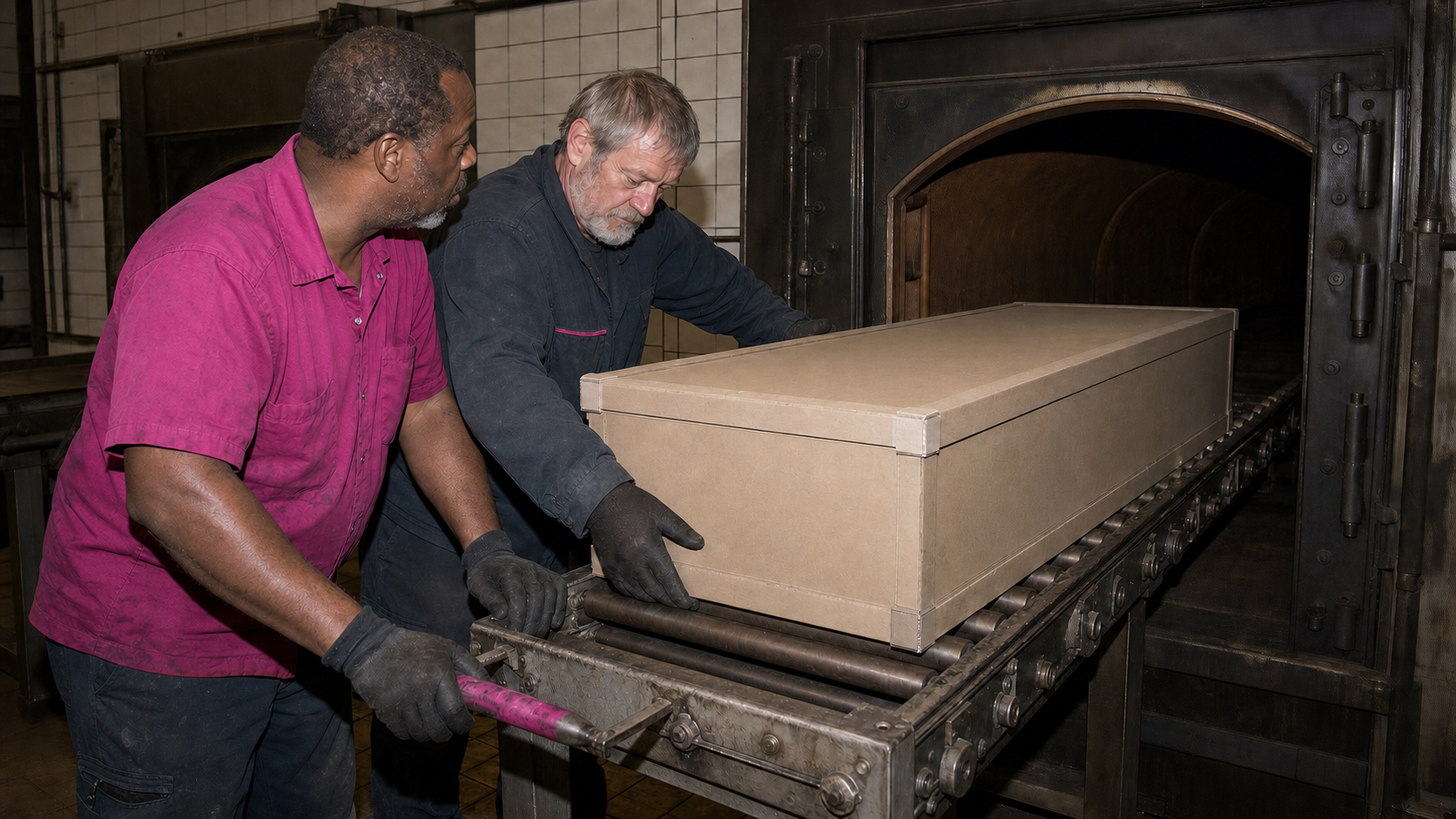
A direct cremation, with no viewing or ceremony, costs $2,202 on average in the United States in 2026, and low-cost cremation networks sell complete packages for $495 to $1,495 depending on location.[5] A funeral with a viewing and ceremony followed by cremation runs a national median of $6,280, per the National Funeral Directors Association's most recent General Price List study.[9]
The cremation is identical in both. The price difference is everything sold around it: embalming, facilities and staff, vehicles, printing, and the funeral home's nondeclinable $2,495 basic services fee.[9] This guide itemizes both prices, walks through what physically happens during a cremation, answers how long it takes, and covers the federal rights that protect you from overpaying.
| Arrangement | National figure | Source |
|---|---|---|
| Direct cremation, no viewing or ceremony | $2,202 average | US Funerals Online 2026 state pricing guide[5] |
| Direct cremation, lowest state average | $1,264 (Oregon) | US Funerals Online[5] |
| Direct cremation, highest state average | $3,183 (North Dakota) | US Funerals Online[5] |
| Low-cost cremation network packages | $495 to $1,495 | US Funerals Online[5] |
| Funeral with viewing, then cremation | $6,280 median | NFDA 2023 General Price List study[9] |
| Of which, the cremation fee itself | $400 | NFDA 2023 General Price List study[9] |
| Of which, the alternative container | $160 | NFDA 2023 General Price List study[9] |
Last verified September 18, 2026. Each figure was read on the cited page that day. The NFDA study is the 2023 edition, which is the most recent the association has published; the US Funerals Online guide is its 2026 update.
Cremation is now the majority choice. NFDA projected a 63.4 percent U.S. cremation rate for 2025 and expects 82.3 percent by 2045.[3] Deciding between the two dispositions? Start with cremation vs. burial.