GriefJuly 2026 · 12 min read

Losing Someone to Suicide: What Grief Looks Like When the Death Was a Choice

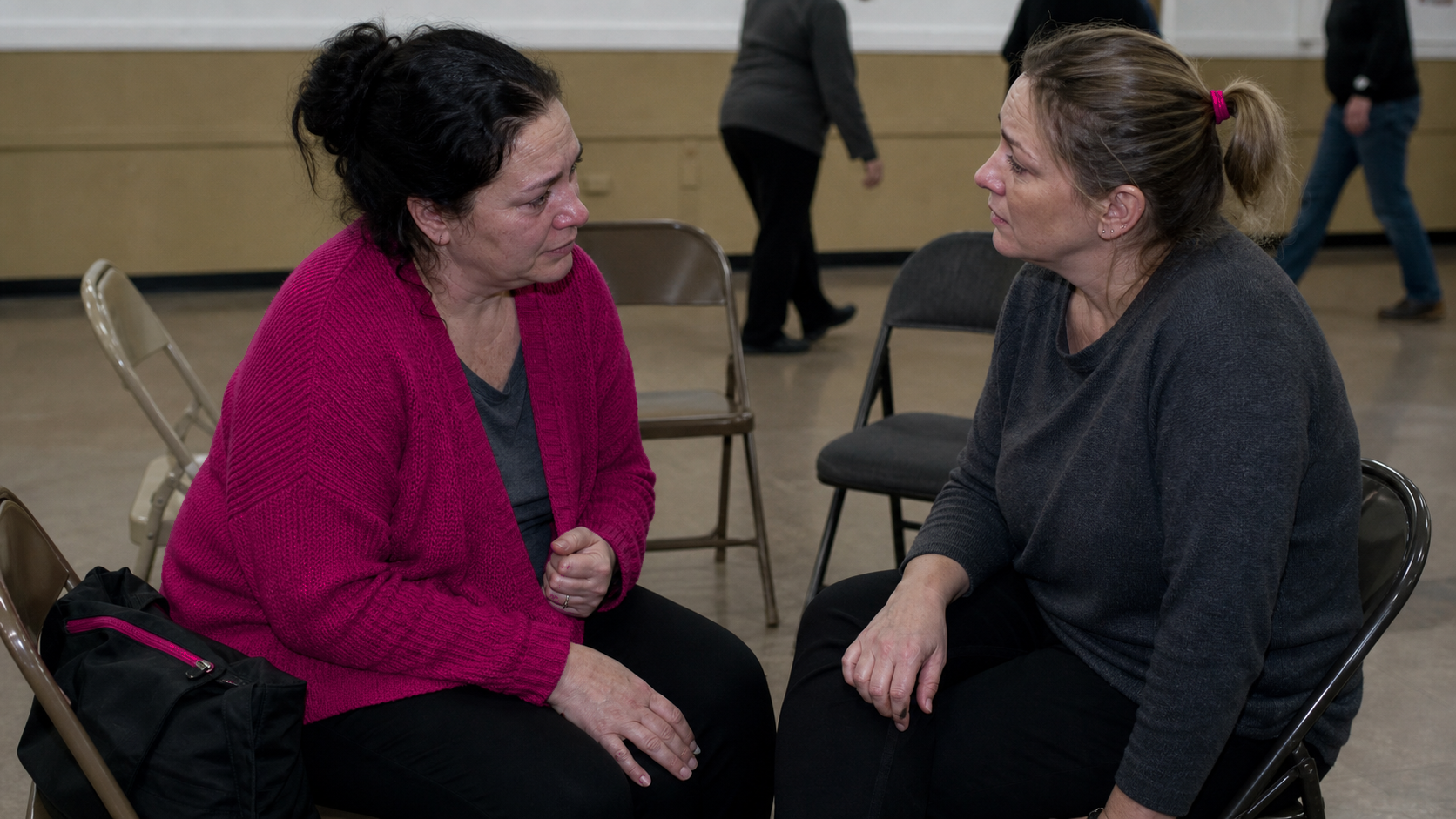
When someone you love dies by suicide, the grief is unique and agonizing, full of unanswered questions, guilt, and deep isolation.

Losing Someone to Suicide: What Grief Looks Like When the Death Was a Choice

In This Article

When someone you love dies by suicide, nothing feels stable anymore. It often meets the clinical criteria for complicated grief. A prolonged, impairing form of mourning that is distinct from typical bereavement. This isn't the grief you might expect after a long illness or a sudden accident. It is harder, in specific ways: guilt, anger, and a question no one can answer. It's a grief full of confusion, anger, guilt, and an almost unbearable sense of betrayal. You’re not just mourning a death; you’re grappling with a choice, and that distinction changes everything.

This article isn't going to sugarcoat it. We're going to talk about the raw, unfiltered reality of losing someone to suicide, because that's the only way through it. There are no easy answers, no quick fixes, and certainly no polite euphemisms here. We're going to call it what it is: death by suicide. And we're going to acknowledge the profound, often isolating, pain that comes with it.

Where to Find Suicide Loss Support Groups

The section above says to find a survivor-specific support group. Here is how to actually find one.

  • AFSP's support group directory. The American Foundation for Suicide Prevention maintains a searchable directory of suicide bereavement support groups. You can filter for U.S. in-person groups within 15 to 100 miles of your zip code, local online groups, nationwide online groups, or international groups.[7] AFSP lists the groups as a public service and does not run or vet them itself, so contact the facilitator first to confirm the group is active and is specifically for suicide loss.
  • Alliance of Hope for Suicide Loss Survivors. A nonprofit founded in 2008, built by and for people who lost someone to suicide. Its core offering is a free, moderated online forum where survivors post and answer each other.[8] The forum runs around the clock, which matters at 3 a.m. when nothing local is open. The organization also publishes survivor stories and runs email series for specific losses, such as mothers whose child died.
  • Your local hospice. Federal rules require every Medicare-certified hospice to run an organized bereavement program, supervised by a qualified grief professional, for up to a year after a patient's death.[9] Many hospices open their grief groups to the whole community at no charge, not just to hospice families, and some run dedicated survivors of suicide loss (SOS or SOSL) groups. Call the hospices near you and ask two questions: do you run a suicide loss group, and if not, who does. Hospice bereavement coordinators know which grief services exist nearby better than almost anyone.

One practical note. Most suicide loss groups are peer groups, led by fellow survivors or trained facilitators. They are not therapy and do not replace the trauma-informed therapy described above; they work alongside it. Nobody will force you to talk. Go once before you judge, and if the first group is a bad fit, try another. Group chemistry varies, and a bad first meeting is a reason to switch groups, not a reason to quit.

Why the Words Matter: 'Died by Suicide,' Not 'Committed'

This article says "died by suicide" and never "committed suicide." That is deliberate, and it is worth explaining once, without a lecture.

"Committed" is the language of crime. People commit murder, fraud, theft. The phrase is a leftover from centuries when suicide was a crime on the books, and it attaches a verdict to a death that should carry none. Nobody commits cancer. Nobody commits a heart attack. The American Foundation for Suicide Prevention's guidance is blunt: avoid "committed," because it perpetuates the stigma of suicide as a crime and passes moral judgment. Say "died by suicide," "took their life," or "ended their life" instead.[6]

The same logic covers "successful" and "failed" attempts. A death is not a success. Surviving is not a failure. Say "died by suicide" or "attempted suicide" and stop there.

Why does this matter to you, the survivor? Because stigma works through language. Every "committed" quietly tells you that your person did something criminal, and that you are the family of a criminal. You will hear it from well-meaning people for years. You do not have to correct them, and you do not have to police your own words in the worst of your grief. Use whatever words come out. But when you have the energy, saying "died by suicide" out loud changes how the people around you talk, and that makes the next conversation easier for you and for the next survivor.

The Unanswered 'Why' That Haunts You

Perhaps the most brutal aspect of suicide loss is the relentless, unanswerable question: Why? Unlike other deaths, where there might be a clear medical cause or an unavoidable accident, suicide leaves behind a chasm of unanswered questions. Was it something I said? Something I didn't do? Could I have stopped it? These questions echo in the minds of survivors, often without resolution. The person who held the answers is gone, and the silence can be deafening. This relentless pursuit of understanding can trap survivors in a cycle of rumination, making it incredibly difficult to move forward.

This isn't just philosophical angst; it's a profound psychological burden. The lack of closure can complicate grieving, leaving you with no way to resolve it. For many, the 'why' becomes an obsession, a desperate attempt to make sense of the senseless. And without that sense, the grief can feel like it will never resolve.

The Crushing Weight of Survivor Guilt

Survivor guilt is a common, yet particularly insidious, companion to suicide loss. It's the feeling that you should have done something, anything, to prevent the death. It's the agonizing replay of conversations, missed calls, and overlooked signs. You might feel guilty for being alive when they are not, or for not recognizing their pain. This isn't just a fleeting thought; it can be a constant, consuming belief that you are somehow responsible. Studies indicate that a significant percentage of suicide loss survivors experience intense guilt, often believing they failed their loved one. For example, one study found that 90% of survivors experienced some form of guilt after a traumatic event where others perished, and this is particularly acute in suicide loss.

This guilt can manifest in many ways: self-blame, self-punishment, or even a reluctance to experience joy. It can be fueled by societal narratives that often place responsibility on those closest to the person who died. The truth, however, is far more complex. Suicide is rarely the result of a single factor or the fault of one individual. It's a tragic confluence of mental health struggles, life circumstances, and often, an overwhelming sense of hopelessness that can be invisible to even the most loving eyes. Yet in deep grief, emotion usually wins out over logic.

The Stigma: A Silent, Suffocating Burden

Grief is heavy on its own; the stigma around suicide loss makes it even harder to carry. Despite growing awareness, suicide remains a taboo subject. Many survivors report feeling isolated, judged, or even blamed by others. Friends might shy away, unsure of what to say or how to act. Family members might struggle to acknowledge the cause of death, opting for euphemisms that only serve to deepen the wound. This societal discomfort forces many to grieve in silence, compounding their pain and preventing them from seeking the support they desperately need. The American Association of Suicidology notes that the widespread stigma around suicide is extremely harmful to both those affected and to suicide prevention initiatives.

This stigma isn't just about awkward conversations; it has tangible consequences. It can lead to social isolation, discrimination, and a reluctance to talk openly about the death, which is crucial for healing. The fear of judgment can prevent survivors from sharing their true feelings, from expressing their anger, confusion, or even relief. It creates an environment where the bereaved feel they must protect others from the truth, rather than being supported in their own grief. This silent burden can be as devastating as the loss itself, making an already unbearable situation even more isolating.

The Shadow of Increased Risk: When Grief Becomes Dangerous

It's a grim reality that those who lose a loved one to suicide are themselves at a higher risk of suicide. This isn't a judgment; it's a stark warning. The trauma, the unanswered questions, the guilt, and the isolation can combine into real danger. Suicide loss survivors are 64% more likely to attempt suicide and 80% more likely to quit their jobs or drop out of school compared to those who have experienced other types of loss. The emotional toll is immense, and the psychological impact can be profound, leading to increased rates of depression, anxiety, and post-traumatic stress disorder (PTSD). It's a cruel irony that the very act that caused their pain can also become a dangerous consideration for those left behind.

This elevated risk underscores the critical need for immediate and ongoing support for suicide loss survivors. It's not just about coping with grief; it's about safeguarding their own mental health and well-being. The pain can be so overwhelming that it distorts perspective, making it difficult to see a path forward. Recognizing this heightened vulnerability is the first step toward ensuring that those who are grieving receive the specialized care and attention they need to get through this and avoid becoming another statistic.

What Actually Helps

So, what does help after a suicide? First and foremost, acknowledge that your grief is unique and valid. There's no right or wrong way to feel, and comparing your experience to others will only add to your burden. Seek out support groups specifically for suicide loss survivors. These groups provide a safe space to share your experiences with others who truly understand the complexities of your grief. The shared understanding can be incredibly validating and can help ease the isolation that stigma creates. Research suggests that peer support can be highly effective in reducing the unique aspects of suicide-related grief.

Therapy, particularly trauma-informed therapy, can also be invaluable. A therapist can help you process the trauma, navigate the intense emotions, and develop coping mechanisms. Don't be afraid to seek professional help; it's a sign of strength, not weakness. Additionally, lean on trusted friends and family who are willing to listen without judgment. And crucially, understand what not to say to a suicide loss survivor. Avoid platitudes like "They're in a better place" or "Everything happens for a reason." These phrases, while well-intentioned, can be incredibly dismissive and painful. Instead, offer concrete support: "I'm so sorry for your pain," "I'm here for you, whatever you need," or simply, "I don't know what to say, but I care about you." The presence of a compassionate, non-judgmental listener is often more powerful than any words.

What You Can Do Right Now

If you are reeling from the suicide of a loved one, here are some immediate, actionable steps you can take:

  1. Reach Out: Connect with a suicide loss support group. Organizations like the American Foundation for Suicide Prevention (AFSP) or the Alliance of Hope for Suicide Loss Survivors offer online and in-person groups. You are not alone in this.
  2. Seek Professional Help: Find a therapist specializing in grief and trauma. Cognitive Behavioral Therapy (CBT) or Eye Movement Desensitization and Reprocessing (EMDR) can be particularly helpful for processing traumatic grief. Don't wait until you're in crisis; proactive support is vital.
  3. Prioritize Self-Care: This might feel impossible, but even small acts can make a difference. Eat nourishing food, try to get some sleep, and engage in gentle physical activity. Your body is also processing trauma.
  4. Set Boundaries: You don't owe anyone an explanation or a performance of grief. It's okay to say no to social engagements, to limit contact with people who are unhelpful, and to protect your energy.
  5. Educate Others (If You Feel Up To It): If you're able, gently correct misconceptions or challenge stigmatizing comments. Sometimes, people simply don't know what to say or how to act. You can be an agent of change, but only if and when you feel strong enough.
  6. Remember Your Loved One: Find healthy ways to remember and honor the person who died. This could be through journaling, creating a memorial, or engaging in activities they loved. The love you had for them doesn't disappear; finding places to put it matters.

Losing someone to suicide is a journey no one should have to take, but you don't have to walk it alone. There is help, there is understanding, and there is a path towards healing, even if it feels impossibly distant right now. Your pain is real, your questions are valid, and your survival is a testament to your strength. Keep going. We're here with you.

Sources & References

Research & Citations

All factual claims in this article are sourced from peer-reviewed research, government data, and named institutions. Citations follow APA 7th edition format.

  1. [1]American Foundation for Suicide Prevention. (2024). *Suicide loss survivors*. ↗ Source Retrieved July 2, 2026
  2. [2]Centers for Disease Control and Prevention. (2024). *Suicide data and statistics*. ↗ Source Retrieved July 2, 2026
  3. [3]Jordan, J. R. (2001). Is suicide bereavement different? A reassessment of the literature. *Suicide and Life-Threatening Behavior*, *31*(1), 91–102. https://doi.org/10.1521/suli.31.1.91.21310
  4. [4]Survivors of Suicide Loss Task Force. (2015). *Responding to grief, trauma, and distress after a suicide: U.S. national guidelines*. Suicide Prevention Resource Center. ↗ Source Retrieved July 2, 2026
  5. [5]Cerel, J., McIntosh, J. L., Neimeyer, R. A., Maple, M., & Marshall, D. (2014). The continuum of survivorship: Definitional issues in the aftermath of suicide. *Suicide and Life-Threatening Behavior*, *44*(6), 591–600. https://doi.org/10.1111/sltb.12093
ShareX / Twitter

Keep Reading

Grief

Grief Is Not Linear. Stop Pretending It Is.

The five stages of grief were never meant to be a roadmap. The psychologist who coined them said so herself. So why does everyone still talk about grief like it has a schedule?

10 min read
Culture

Grief in the Workplace: Why American Bereavement Leave Is Broken

The average American gets 3 days of bereavement leave. Grief researchers say it takes 6 months to a year to function normally again. Something is very wrong.

11 min read
Grief

How to Talk to Your Kids About Death (Without Traumatizing Them)

Child psychologists say the worst thing you can do is avoid the conversation entirely. Here's how to do it at every age, from toddlers to teenagers.

8 min read
Grief

Complicated Grief: When Mourning Doesn't Follow the Rules

Sometimes grief doesn't follow the usual pattern. When mourning becomes a persistent, debilitating force, it might be complicated grief, and it's time to talk about it.

17 min read
Culture

Why Americans Are Terrified of Death (And What It's Costing Them)

A deep dive into death avoidance culture and the $20 billion industry that profits from it.

10 min read
Grief

Grief Therapy: What It Is, What It Costs, When You Need It

Most grief needs no therapy. About 10 percent of bereaved people get stuck, and one 16-session treatment has real trial evidence. Here is what grief therapy costs, what insurance covers, and the free help hiding in plain sight.

8 min read

The Death Dispatch

More stories like this, weekly.

A newsletter about death you'll actually look forward to reading.