GriefJuly 2026 · 10 min read

How to Write an Obituary: A Practical Guide That Actually Helps

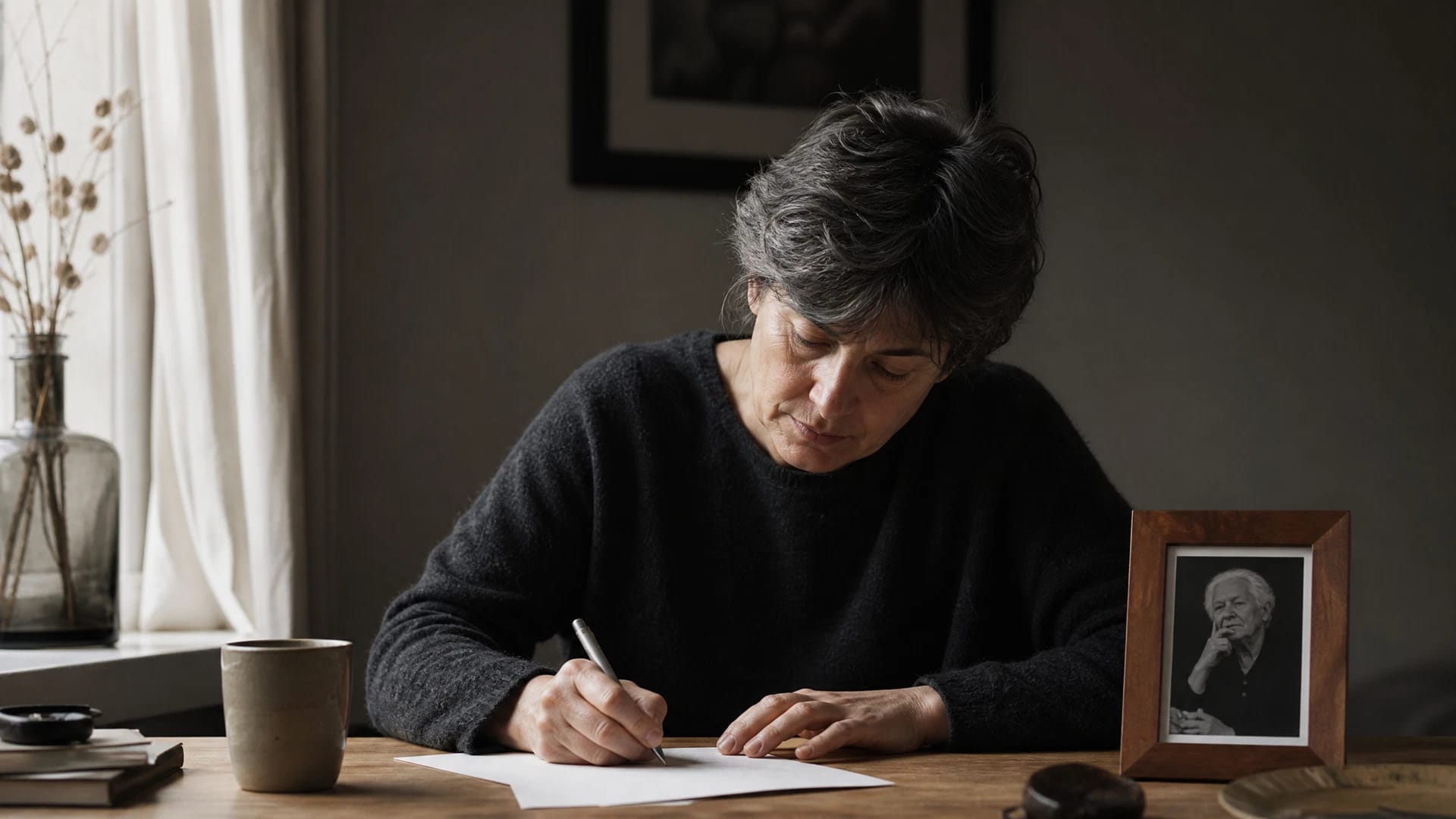
Writing an obituary is one of the hardest things you'll do in the days after someone dies. Here's how to do it well. Without losing yourself in the process.

How to Write an Obituary: A Practical Guide That Actually Helps

In This Article

What an obituary actually is (and isn't)

An obituary is a public announcement of someone's death. Writing it is one of many tasks that pile up alongside the paperwork that no one prepares you for. That's the functional definition. But the real thing, the one that matters, is a short piece of writing that tries to capture who a person was in the time they had.

It is not a resume. It is not a list of accomplishments. It is not a sanitized press release designed to make everyone feel comfortable. The best obituaries are honest, specific, and human. They tell you something about the person that you couldn't have guessed from their job title.

The worst ones read like a form letter with the blanks filled in. "John was a loving husband, devoted father, and loyal friend who will be missed by all who knew him." That sentence could describe literally anyone. It describes no one.

You can do better. And this guide will help you.

When you need to write one

Not every death requires a formal obituary, but most families find that writing one, even a short one, serves an important purpose. It creates a record. It gives people something to share. It forces you to articulate, in words, who this person was.

You'll typically need an obituary in the following situations:

Newspaper publication. Most local papers still publish obituaries, either for free (short death notices) or for a fee (longer obituaries with photos). Deadlines are tight. Often 24 to 48 hours before the service.

Funeral home programs. The printed program handed out at a service usually includes a short biography. The funeral home will often ask you for this within the first day or two of making arrangements.

Online memorial platforms. Sites like Legacy.com, Everplans, and the funeral home's own website often host obituaries that can be shared via link and remain accessible indefinitely.

Social media. Many families post a version of the obituary on Facebook, Instagram, or LinkedIn. Particularly for younger people or those with large professional networks.

You don't have to write a different version for each. Write one good one, then adapt it for length and format as needed.

What to include. And what to leave out

There is no universal rule, but here is what most obituaries include, roughly in order:

Full name. Use the name the person actually went by, not just their legal name. If everyone called them "Bud" for sixty years, lead with Bud.

Age and date of death. Some families omit age, particularly for younger deaths. That's your call.

Place of death. City and state is sufficient. You don't need to specify "at home" or "at the hospital" unless it's meaningful to you.

Survivors. The people left behind. Spouse, children, grandchildren, siblings, parents. List them by name if you want. Some families list them by relationship only.

Preceded in death by. People who died before them. Parents, siblings, a child.

Career and education. A sentence or two. What they did, where they went to school if it was important to them.

The things that made them them. This is the part most obituaries skip, and it's the most important part. What did they love? What were they obsessed with? What would they have been doing on a random Tuesday afternoon? What will people miss most?

Service information. Date, time, location of the funeral or memorial. Whether it's public or private. Where to send flowers or donations.

What to leave out: Cause of death is optional and often omitted. You are not required to disclose it. If the death was by suicide, overdose, or another stigmatized cause, you have every right to simply say "died unexpectedly" or "passed away after a brief illness" or nothing at all. That is your family's private information.

How long should an obituary be?

For a newspaper, expect to pay by the word or by the inch. A standard newspaper obituary runs 150 to 300 words. A longer tribute can run 500 to 800 words and will cost more.

For a funeral home program or online memorial, length is less constrained. 300 to 600 words is typical. Long enough to say something real; short enough that people will actually read it.

For social media, shorter is better. 150 to 250 words, with a photo.

The length doesn't determine the quality. A 200-word obituary that captures who someone was will outlast a 1,000-word one that doesn't.

How to start when you have no idea where to begin

The blank page is brutal when you're grieving. Here are a few approaches that help:

Start with a specific memory. Not "she loved cooking" but "she made the same pot of black bean soup every Sunday for thirty years and never once wrote down the recipe." Specificity is what makes an obituary feel real.

Ask someone else. If you're too close to the person, or too deep in grief, ask a sibling, a close friend, a colleague. Ask them: what's the one thing you'll always remember about her? What would you want someone who never met her to know?

Start in the middle. You don't have to write the opening line first. Write the part you know, the career, the survivors, and come back to the lead when you have more distance.

Give yourself permission to write badly. The first draft doesn't have to be good. It just has to exist. You can fix it. You can't fix a blank page.

Obituary templates: the good, the bad, and the generic

Templates exist because they help people who are overwhelmed get started. There is nothing wrong with using one. The problem is when the template becomes the final product.

A template might give you this: "John Smith, 72, of Columbus, Ohio, passed away peacefully on June 15, 2026, surrounded by his loving family."

That's a starting point. But then you have to fill it with something real. What did John do on weekends? What was his laugh like? What did he build, grow, cook, fix, collect, or obsess over?

The template gives you the structure. You have to fill it with the real person.

Obituary examples you can adapt

Every name and person below is invented. The structures are real, and you can borrow any of them.

A short obituary example (for a paid newspaper notice, where every line costs money):

"Maria Delgado, 81, of Tucson, died January 12, 2026. She taught third grade for 34 years and never once repeated a Halloween costume. She is survived by her daughters Elena and Rosa, four grandchildren, and the neighborhood cat she swore was not hers. Services January 18 at St. Ambrose, 10 a.m. In lieu of flowers, buy a kid a book."

Sixty-some words. It names the death, the dates, the survivors, the service, and it still sounds like one specific woman. That is the whole assignment.

A standard-length example (funeral home website or online memorial, no length charge):

"James 'Jim' Okafor, 67, of Dayton, died at home on March 3, 2026, after two years of living stubbornly well with pancreatic cancer. Born in Enugu, Nigeria, he came to Ohio at 19 with one suitcase and a chemistry scholarship, and spent 40 years as a water-treatment engineer, a job he defended as 'the most important thing nobody thanks you for.' He met his wife, Carol, at a bus stop in 1983; he missed his bus on purpose for three weeks before she noticed. He is survived by Carol; his children, Daniel and Amara; his brother, Chidi; and six grandchildren who never beat him at chess, because he refused to let them win. The family will receive friends March 8 from 4 to 7 p.m. at Restland Funeral Home. Donations to the Dayton Public Library in lieu of flowers."

An unconventional example (when the person would have hated a formal one):

"Ruth Ann Kowalski, 74, got her wish on February 20, 2026: she died before her sister could say 'I told you so' about the motorcycle. Ruth spent her working life as an ER nurse and her retirement undoing the caution it taught her. She leaves behind her sister, Frances, who was right about the motorcycle; her sons, Peter and Marek; and a garage nobody is allowed to sell until the '72 Norton is fixed. No service. Raise a glass and check your tire pressure."

Notice what all three share: the plain word "died," one or two details no other human being could claim, and zero filler about celestial reunions. Notice what none of them share: a single sentence that could be copy-pasted onto someone else.
Writing for a newspaper vs. a funeral home vs. online

Newspaper: Tight word count. Lead with name, age, date of death. Include service information. Avoid flowery language. It reads as filler and costs money.

Funeral home program: More personal. This is what people hold in their hands at the service. A photo helps. The tone can be warmer and more narrative.

Online (Legacy.com, funeral home website): No word limit. Can include multiple photos. Can be updated over time. Can include links to a memorial fund or charity.

Social media: Write as if you're speaking to the person's community. First-person is fine. A photo is essential. Keep it to a few paragraphs.

What to do when the relationship was complicated

Not everyone dies having been a good person. Not every relationship was loving. You are not required to lie.

You are also not required to use the obituary as a venue for grievance. The goal is to write something you can live with. Something that honors the truth of the person's life without causing additional harm.

Some families write a minimal obituary: name, dates, survivors, service information. That is enough. It is complete. It fulfills the function without requiring you to perform emotions you don't feel.

Others find that writing honestly, acknowledging complexity, or simply focusing on the parts of the person that were genuinely good, provides unexpected relief. There is no right answer. There is only what you can live with.

If the person died by suicide, you may find guidance in the resources provided by the American Foundation for Suicide Prevention (AFSP), which has specific recommendations for how to write about suicide in a way that is honest, non-stigmatizing, and safe for survivors.

Common mistakes and how to avoid them

The resume obituary. A list of jobs and degrees with no sense of who the person was. Fix: add one specific, human detail for every two professional ones.

Too much passive voice. "He was loved by all who knew him. He was preceded in death by his parents. He was a member of..." Fix: vary your sentence structure. Use active voice where you can.

The euphemism pile-up. "Passed away," "went to be with the Lord," "left this world," "departed," "transitioned." Pick one and use it once. The rest is noise.

Forgetting the service information. People need to know when and where to show up. Don't bury it at the end in a single sentence.

Writing it alone. You don't have to do this by yourself. Ask for help. Divide the sections. Have someone else read it before you submit it.

A note on cost

Newspaper obituaries can be surprisingly expensive. A 300-word obituary in a mid-sized city paper can run $200 to $500. In major metro markets, it can be significantly more.

If cost is a concern, consider a shorter death notice (name, dates, service info) in the paper, plus a full obituary on a free platform like Legacy.com or the funeral home's website. You can also post the full obituary on social media and link to it from the death notice.

Check whether the paper offers a free basic listing. Many do. You are not obligated to publish an obituary in a newspaper at all. An online memorial and a social media post reach more people than most local papers do at this point.

Sources & References

Research & Citations

All factual claims in this article are sourced from peer-reviewed research, government data, and named institutions. Citations follow APA 7th edition format.

  1. [1]National Funeral Directors Association. (2024). *Writing an obituary*. ↗ Source Retrieved July 2, 2026
  2. [2]Hoy, W. G. (2013). *Do funerals matter? The purposes and practices of death rituals in global perspective*. Routledge.
  3. [3]Walter, T. (1996). A new model of grief: Bereavement and biography. *Mortality*, *1*(1), 7–25. https://doi.org/10.1080/713685822
  4. [4]Kastenbaum, R. (2012). *Death, society, and human experience* (11th ed.). Pearson.
  5. [5]American Foundation for Suicide Prevention. (2024). *Reporting on suicide: Recommendations for media*. ↗ Source Retrieved July 2, 2026
ShareX / Twitter

Keep Reading

Planning

What Happens to Social Media Accounts When You Die

Your social media accounts don't disappear when you die. Here's what happens to each platform. And what you can do now to make it easier on the people you leave behind.

12 min read
Planning

How to Close Accounts After a Death: What Every Company Actually Requires

Closing accounts after a death is one of the most exhausting parts of settling an estate. Every company has different rules, some are helpful, and some are not. This guide tells you exactly what to expect and how to track it all.

10 min read
Law & Policy

What Is Probate and How Long Does It Take?

Probate: the legal process that kicks in after you die, ensuring your stuff goes where it's supposed to. Or, where the state says it should.

12 min read
Planning

7 Estate Planning Myths That Are Costing People Money

"I'm too young." "I don't have enough assets." "My family will figure it out." These are the myths that leave families with nothing but a mess.

9 min read
Planning

Celebration of Life: What It Is, What It Costs, How to Plan One

A celebration of life happens on your schedule, at your price, without the body in the room. Here is what it costs, how it differs from a funeral, and how to plan one.

9 min read
Culture

How to Find an Obituary (Free, Without the Paywalls)

Newspapers.com wants $7.95 a month to show you a page your library will show you free. Here is every free route to an obituary, in the order that actually works.

7 min read

The Death Dispatch

More stories like this, weekly.

A newsletter about death you'll actually look forward to reading.