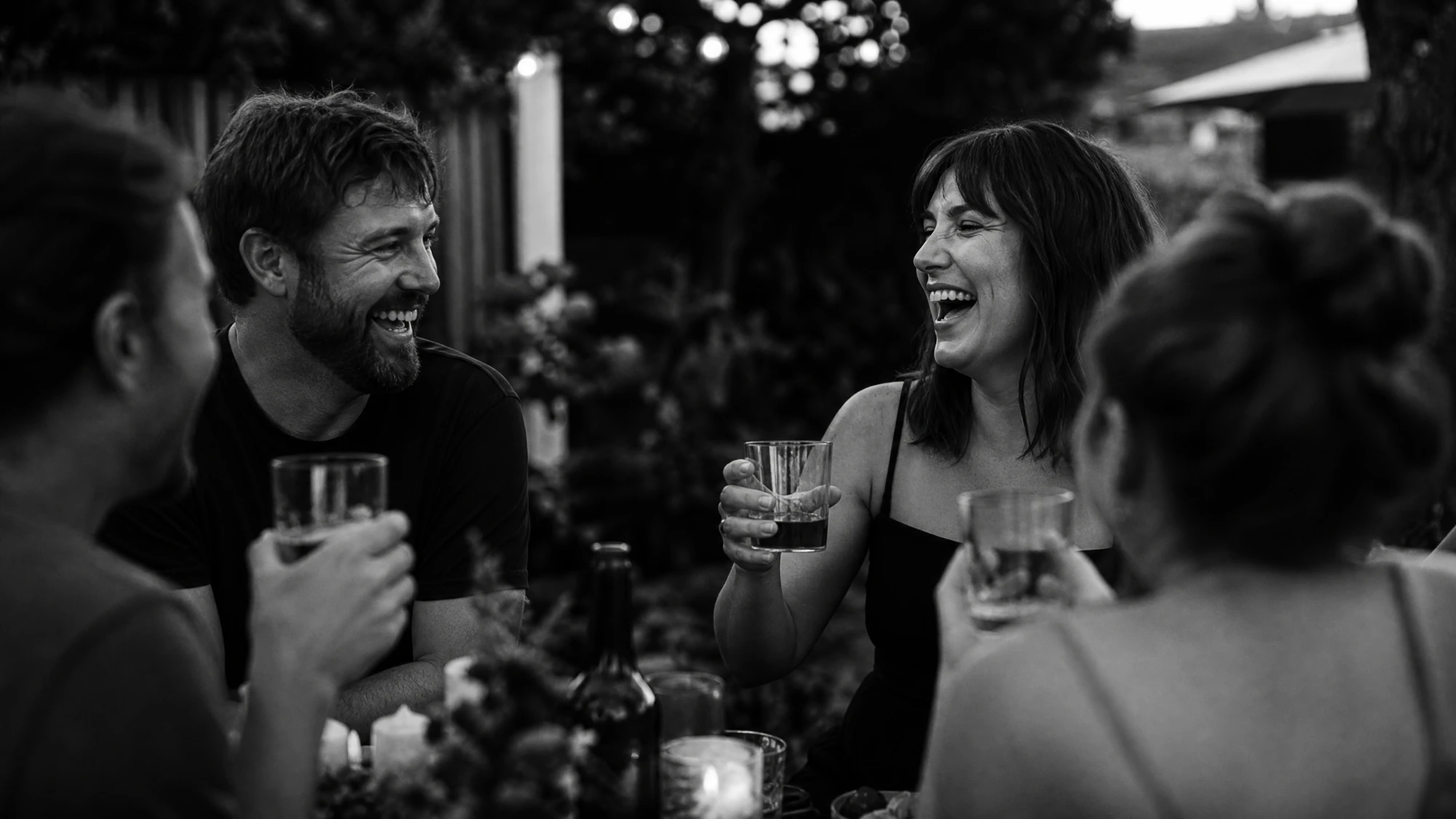
A celebration of life is a gathering held to remember someone who died, usually weeks or months after the death and usually without the body present. The cremation or burial happens first, as its own step, and the gathering follows whenever the people who mattered can actually get there.
Nothing about it is required. No funeral home, no officiant, no fixed venue, no deadline. That's the entire point. A funeral has to happen within days because a body is waiting. A celebration of life happens when you decide, where you decide, at a price you control.
The format is open. It can be a dinner, a party, a service with speakers, a hike, a bonfire, or an afternoon in a backyard. It can be religious or secular, structured or loose, two hours or a full day. What makes it a celebration of life is the aim: the event is built around the person's actual life instead of a standard liturgy.
This is now mainstream. In the National Funeral Directors Association's 2026 consumer study, 30.3 percent of families reported holding services in banquet halls, 18.3 percent in outdoor settings, and 10.2 percent at home. Acceptance of certified celebrants, the people who lead nonreligious services professionally, hit 48 percent, up from 36.3 percent a year earlier. And 62.1 percent of consumers had attended a service led by someone other than a faith leader.[1]