Most pet memorial pages are a list of things to buy and a poem about a bridge. This is the other kind: what to keep, what to do, what to ask the clinic for before it's too late to ask, and the four sentences only you can write. None of it costs much. All of it is the sort of thing you'd be glad, in a year, that you did.
Start with the words
Write the obituary. Not because anyone will publish it, but because writing four sentences down is how you mark that it happened, and because the people who loved the animal want something to answer. Name, kind, and the date. The years and the people. The one thing only they did. What they loved.
The free pet obituary builds it from those answers, and it says died, because that's what happened. Post it in the family group chat with the photo and see what comes back. The stories are the memorial; the paragraph is just how you start them.
Things to keep
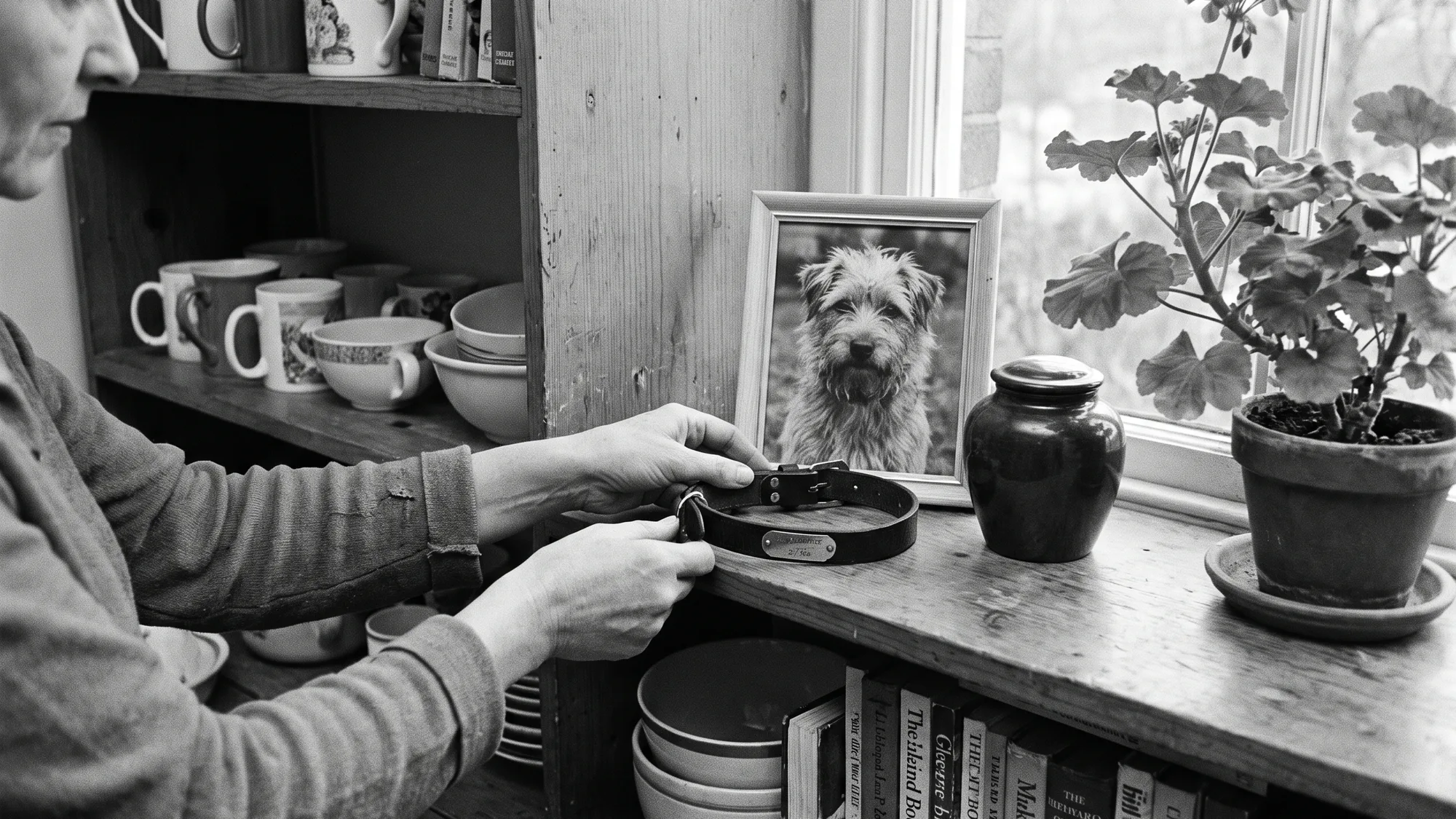
- The collar, on a shelf you pass every day, tag facing out. Not in a drawer. The drawer is where things go to stop mattering.
- The tag on your keys. It's the one memorial you'll have with you at the hardware store in March when it hits you in the parking lot.
- A paw print and a lock of fur. Ask for both before the euthanasia or before the body goes to the crematory, because afterward it's too late to ask. Clinic policies vary: some include a clay paw print, some sell it as an add-on, and at least one national at-home euthanasia service includes a clay print and a fur clipping as standard.[1] Whoever you're dealing with, say the words out loud: "I'd like a paw print."
- One photo, printed and framed, instead of four hundred on a phone. Pick the one where they look like themselves, not the one where they look their best.
- The last vet's note or the adoption paper, folded behind the photo in the frame. Nobody sees it. You know it's there.
Things to do
- Walk the route. On the day, or a week later, or on the anniversary. The whole loop, at their pace, stopping where they stopped. Bring someone who knew them or go alone; both work.
- Make a donation in their name to the shelter they came from, or the rescue, or the vet school's hospice fund. Many shelters print memorial gifts in a newsletter, which means the name goes somewhere other people read it. Put the same line in the obituary: "In Biscuit's memory, donations can go to the county shelter."
- Plant something that comes back. A perennial by the spot in the yard they claimed, or a pot on the balcony if there's no yard. The point is the coming back.
- Make the photo book, the cheap online kind, twenty pages, one caption each. It sits on the coffee table where a guest can pick it up and ask, which is what you want.
- Tell the vet's office. Many practices keep a memory board or a page on their site and will add a paragraph if you send it. The people who took care of the animal for years want to know how it ended, and they rarely find out.
The bowl, the bed, the ashes
There's no rule. Some people wash the bowl and put it away the same day, because seeing it is unbearable. Some leave it by the door for a month, because putting it away feels like agreeing. Both are grief doing its job. The only advice worth giving is to decide on purpose rather than by avoidance: pick a day, and on that day either put the things away or decide to keep them out, and stop negotiating with yourself about it every morning.
If ashes come back, they'll come in a temporary container. You don't have to buy the urn the crematory offers, then or ever; a box you already own and like is a fine place for them, and so is the garden, and so is the walk route.[1] If you're still deciding whether to bring ashes home at all, what to do when your pet dies covers every option and the cremation cost estimator covers what each one costs.
For kids
Give them a job. A drawing for the frame, a stone to paint for the spot in the yard, the collar to carry to the shelf. Children grieve by doing, and being handed a task tells them the death is something the family faces together rather than something that happens to the adults behind a closed door.
Use the plain words, died and dead, not "put to sleep" or "went away"; children take those literally, and the grief-support guidance for families is that the soft words confuse and frighten them. Grief after losing a pet has the full section on helping a child, and talking to kids about death covers what to expect at each age.
About the quotes
A lot of people searching for pet memorial ideas are looking for a quote to put on the frame or the post. Skip the bridge. The line that lands is the one only you could write, which is always the specific one: not "loyal companion" but "waited by the door from 5:30 until the car pulled in." If you want a short one, the obituary tool's closing line is two words for a reason. "Good dog." "Good cat." Their name, and the date. That's a complete memorial, and nobody who reads it will wish it were longer.
If it's more than a memorial can hold
Some of this grief is bigger than a shelf can carry, especially after euthanasia, when you made the decision and nobody else did. That's normal, and there are people whose job is to hear it. Cornell's veterinary college runs a Pet Loss Support Hotline at 607-218-7457, staffed by veterinary students trained by professional grief counselors.[2] The other lines, with their hours, are in pet loss hotlines, and the whole shape of the grief, the guilt included, is in grief after losing a pet.
This page is death education, not mental-health advice. If grief is keeping you from functioning, talk to a doctor or a licensed grief therapist. For our full citation list and how we check our facts, see our Sources and Methodology.
Common questions
What is a good way to memorialize a pet?
Write the obituary and send it to the people who knew them. Keep the collar out where you'll see it. Walk their route. Make a donation in their name to the shelter they came from. Ask the clinic for a paw print and a lock of fur before the body goes anywhere.
What should I do with my pet's ashes?
Whatever you want, and there's no deadline. They come back in a temporary container, and you don't have to buy the urn. A box you already like, the garden, or the route you walked together are all fine places, and keeping them on the shelf for a year while you decide is fine too.
How do I help my child memorialize a pet?
Give them a job: a drawing for the frame, a stone to paint, the collar to carry to the shelf. Use the plain words, died and dead. Children grieve by doing, and a task tells them the family is facing this together.
Sources & References
Research & Citations
All factual claims in this article are sourced from peer-reviewed research, government data, and named institutions. Citations follow APA 7th edition format.
Share this story
Post it, or send it straight to the person who needs it. The link goes with it.