End-of-Life CareBy Stephanie Werner · July 2026 · 9 min read

What to Do When Your Pet Dies

The body, the options, the prices nobody posts, and what to tell your kids. The practical guide for the worst day of having a pet.

In This Article

If it just happened

Take a breath. Nothing has to happen in the next ten minutes.

If your pet died at the vet's office, the clinic will keep the body and walk you through the options when you can form sentences again. You can go home. You can call tomorrow. That part is handled.

If your pet died at home, you're the one handling it, so here is exactly what to do. Their body may release fluid after death. That's normal and it isn't a sign anything was done wrong. Lay them on a towel with a garbage bag or waterproof layer underneath. If you want them resting in a curled position, tuck them that way in the first couple of hours, because the body stiffens after that and stays how it lies.

Then move them somewhere cool. A basement floor, a garage, the coolest room you have. In summer this matters more and the clock runs faster. A body kept cool buys you about a day to make calls. It does not buy you a week.

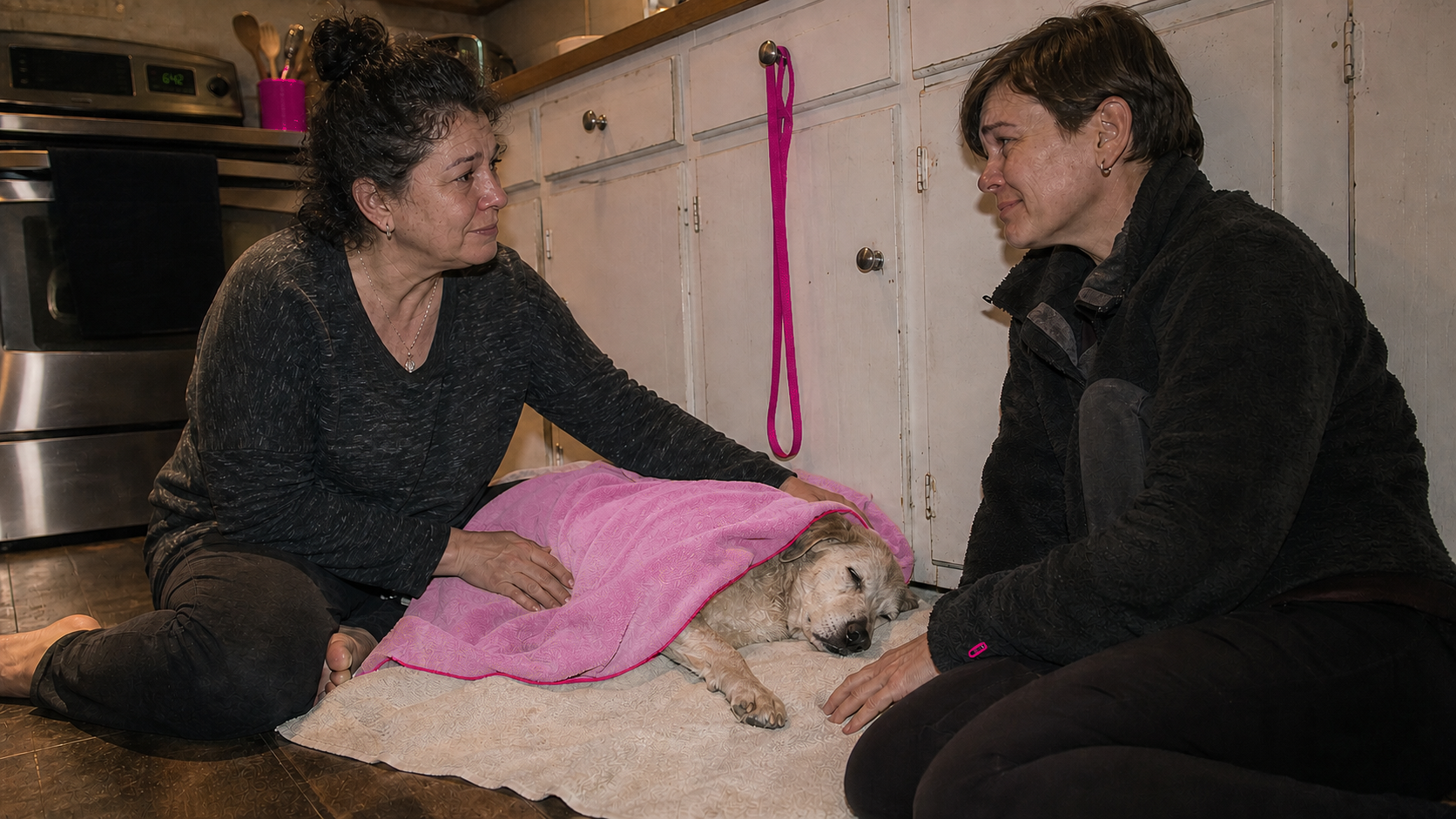
And before any of that, if you need to sit on the kitchen floor with them for an hour, sit on the kitchen floor. The timeline is real but it isn't instant. You get the hour.

Every option, in plain words

Private cremation. Your pet is cremated alone and the ashes that come back are theirs. This is the most expensive standard option and the one to pick if getting the ashes back matters to you.

Communal cremation. Several animals are cremated together and no ashes come back to you. Some crematories scatter the ashes; ask where. It's significantly cheaper, and choosing it doesn't mean you loved your pet less. It means you don't need an urn to remember them.

Aquamation. Water and alkali instead of flame. It's the same process being sold for humans as water cremation, it's gentler on the environment, and it's increasingly available for pets. You still get remains back from a private aquamation. We wrote a full explainer on how the process works.

Home burial. Legal in a lot of places if you own the property, banned in others, and cities are stricter than counties. Check your city or county code before you dig, not after. Dig deep enough that wildlife can't reach the body, keep away from water lines and wells, and call 811 before digging so you don't hit a utility line on the worst day of your month. If you rent, this option is off the table. And think hard if you might move: the grave stays with the house.

A pet cemetery. They exist in most metro areas. You're buying a plot and ongoing upkeep, the same as a human cemetery, and you can visit forever. Ask what happens to the grounds if the business ever sells.

Leaving the body with your vet. The clinic contracts with a crematory and handles everything.[1] Unless you specifically request private cremation, assume the default is communal. If you want to know exactly what happens, ask exactly what happens. A good clinic will tell you straight.

The prices nobody posts

Human funeral homes are required by the FTC Funeral Rule to hand you an itemized price list.[2] That rule covers funerals for people. Nothing like it covers pet aftercare, which is why you can rarely find a pet crematory's prices without calling.

So call. Call two or three, before you hand anyone the body, and ask for prices in writing. What moves the number is simple: your pet's weight, private versus communal, whether they pick up from your home or your vet, and the urn. The urn is where the upsell lives. A sealed bag in a simple container holds ashes exactly as well as a $300 box.

Ask one question word for word: "Will my pet be cremated alone?" If the answer takes more than a sentence, or the word "partitioned" shows up, go somewhere else.

If you get ashes back

Ashes usually come back in a few days to two weeks, in a sealed bag inside whatever container you chose. A healthy adult dog produces roughly a coffee mug to a coffee can of ashes depending on size. It's less than most people expect. That's normal too.

There are no rules for what happens next. Keep them on a shelf. Bury them under the tree they claimed. Scatter them on the trail you walked every morning. Split them between the people who loved them. Put a pinch in a pendant. Nobody gets a vote but you.

If you're scattering on public land, the same practical notes in our guide to cremated ashes apply to pets: rules exist in national parks and on other people's property, and asking first beats apologizing after.

Telling your kids

Use the word died. Not "went to sleep," not "went away," not "we lost him."

Young kids take words literally. If the dog went to sleep and never woke up, bedtime just became a threat. If the cat went away, they'll wait at the window. Died is a hard word and it is the kind one, because it's true and it doesn't set a trap.

Answer what they actually ask and stop there. Kids ask exactly as much as they can handle. Let them see you sad, because hiding it teaches them grief is something to be ashamed of. If there's a burial and they want to be there, let them be there. Drawing pictures, picking the spot, saying something out loud: all of it helps them do what grief is for.

Child psychiatrists say kids who lose someone need three things: honest information, reassurance they're safe, and permission to feel it.[3] A pet's death is usually the first death a kid gets. Handled straight, it's also the first proof that the family can survive one. We wrote more on talking to kids about death.

The grief is real

Somebody in your life will say "it's just a dog." Somebody always does. They're wrong, and there's research on exactly how wrong in our piece on pet grief, but the short version is: you saw this animal every single day for years. Daily love leaves a daily hole. The bowl by the door. The 6 a.m. weight on your feet. The silence when your key turns.

If you want to talk to someone who will not say "just a dog," Cornell's veterinary college runs a Pet Loss Support Hotline staffed by trained veterinary students.[4] It exists because this grief is common enough, and real enough, that a vet school built a phone line for it.

What you don't owe anyone

A timeline for getting another pet. "When are you getting a new one" will arrive within the week, from someone who means well. There is no correct answer. Some people need a new dog in a month. Some people need five years. Some people are done, and that's allowed too.

An apology for taking a day off. You'd take one for a human funeral. Take one.

An explanation for why this one broke you harder than some human losses did. Plenty of people would admit the same thing if someone else said it first. Consider it said.

And their stuff can stay right where it is until you're ready. The leash on the hook isn't hurting anyone.

Common questions

What do I do if my pet dies at home at night?

Nothing has to happen before morning. Lay them on a towel with a waterproof layer underneath, tuck them into a curled position within the first couple of hours if that matters to you, and move them somewhere cool like a garage or basement. Call your vet or a pet crematory when they open. If you would rather not wait, most emergency vet clinics accept bodies overnight.

Can I bury my pet in my backyard?

Often yes if you own the property, but cities and counties set their own rules and many cities ban it, so check your local code first. Dig deep enough that wildlife cannot reach the body, stay away from wells and water lines, and call 811 before digging. If you rent, backyard burial is not an option.

How much does pet cremation cost?

It depends on your pet's weight, private versus communal cremation, home pickup, and the urn. No law requires pet crematories to post prices the way the FTC Funeral Rule requires for human funerals, so call two or three providers and ask for prices in writing before you hand over the body.

What is the difference between private and communal pet cremation?

Private means your pet is cremated alone and the ashes returned to you are theirs. Communal means several animals are cremated together and no ashes come back. Communal is significantly cheaper. If ashes matter to you, ask directly: "Will my pet be cremated alone?" and expect a one-sentence yes.

Will the vet take care of my pet's body?

Yes. Clinics contract with pet crematories and can handle everything, whether your pet died at the clinic or at home. Unless you specifically request private cremation, assume the default arrangement is communal cremation with no ashes returned. Ask what happens; a good clinic tells you straight.

How do I tell my kids their pet died?

Use the word died, not "went to sleep" or "went away," because young kids take words literally and euphemisms set traps. Answer the questions they actually ask, let them see that you are sad, and let them take part in a burial or goodbye if they want to. Honest information, safety, and permission to feel it are what kids need.

Sources & References

Research & Citations

All factual claims in this article are sourced from peer-reviewed research, government data, and named institutions. Citations follow APA 7th edition format.

  1. [1]ASPCA. (n.d.). *End of life care*. ↗ Source Retrieved July 25, 2026
  2. [2]Federal Trade Commission. (2024). *The FTC Funeral Rule*. ↗ Source Retrieved July 25, 2026
  3. [3]American Academy of Child & Adolescent Psychiatry. (2023). *Grief and children* (Facts for Families No. 8). ↗ Source Retrieved July 25, 2026
  4. [4]Cornell University College of Veterinary Medicine. (n.d.). *Pet Loss Support Hotline*. ↗ Source Retrieved July 25, 2026
ShareX / Twitter

Keep Reading

End-of-Life Care

How Do You Know When It’s Time?

The question every pet owner dreads, answered with an actual scale vets use instead of "you'll just know." Plus what euthanasia really is, what it costs, and what happens after.

10 min read
Grief

Grief After Losing a Pet

Your animal died, and the size of it surprised you. It shouldn’t. Pet grief is real grief, and the reason it feels lonely is that most people treat it as smaller than it is.

8 min read
End-of-Life Care

What Actually Kills Dogs and Cats

Young pets die of things you can prevent. Old pets die of cancer, kidneys, and hearts. Here is what the necropsy data actually shows, and the three numbers worth knowing before you pick a dog.

9 min read

The Death Dispatch

More stories like this, weekly.

A newsletter about death you'll actually look forward to reading.