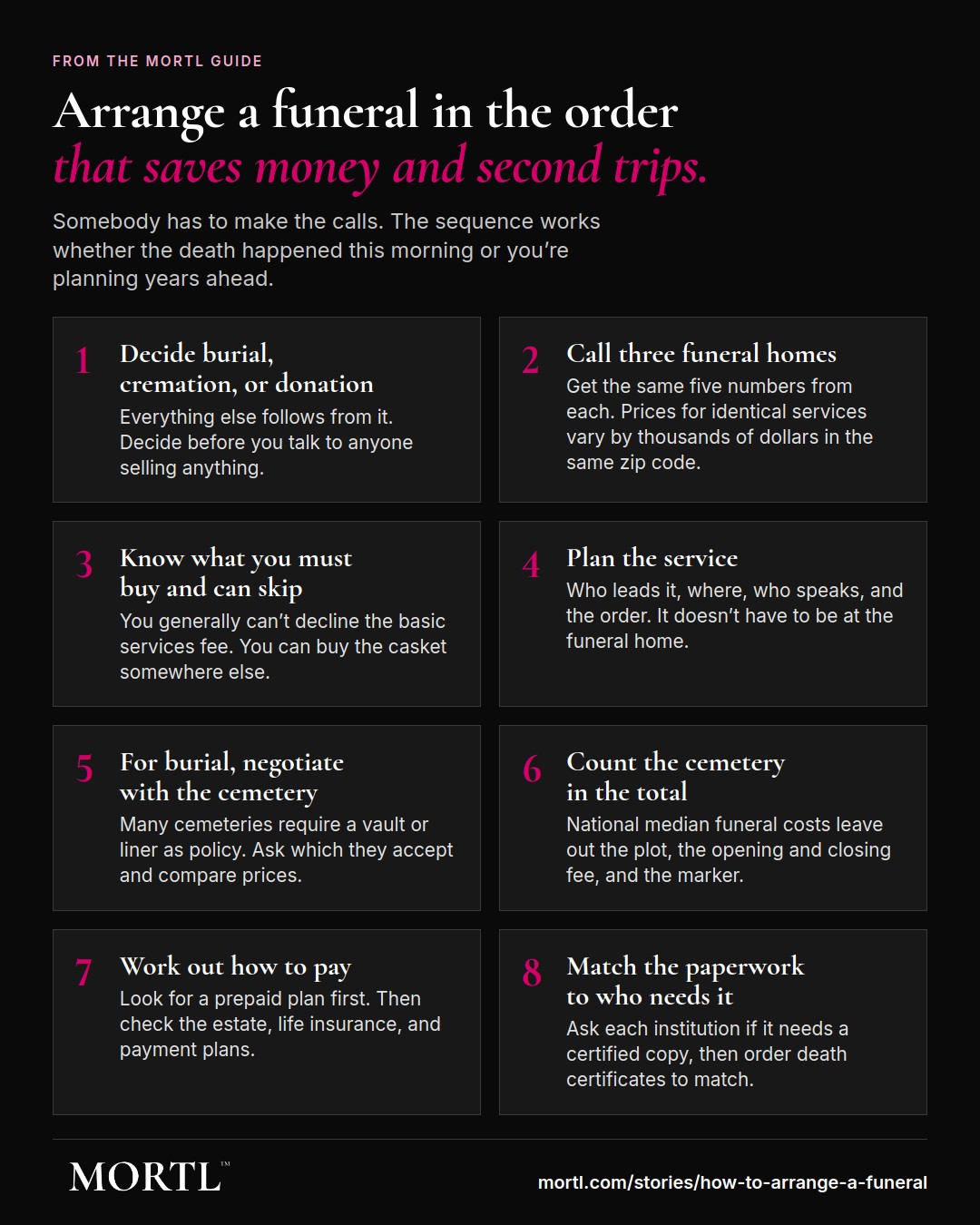
Somebody has to make the calls. If that person is you, here’s the whole sequence, in the order that saves money and second trips. It works whether the death happened this morning or you’re planning years ahead for yourself.
The first decision is what happens to the body: burial, cremation, or donation. Everything else follows from it. The funeral home you choose, the products you buy, the permits you need, and roughly half of the total bill all depend on this one answer, so make it before you talk to anyone selling anything.
- Burial means a casket, a cemetery plot, probably an outer burial container, and opening and closing fees. It’s the most expensive route and the one with the most add-ons.
- Cremation is now the American default. NFDA projects a 63.4 percent cremation rate for 2025, against 31.6 percent for burial.[3] Cremation still allows a full funeral with viewing first, or a simple direct cremation with a memorial later.
- Donation to a medical school or anatomical program can reduce the cost to nearly zero, but programs can reject a body, so you still need a backup plan.
A service and a disposition are separate decisions. You can hold a full funeral and then cremate. You can bury with no service at all. Keep the two questions apart and the options get cheaper and clearer.
If the person who died planned ahead, find that paperwork first: a prepaid funeral contract, a letter of instruction, or notes in an end-of-life file. Our end-of-life planning checklist shows what those documents look like. If the death just happened and you’re still in the first hours, start with what to do when someone dies and come back to this guide when the body is in a funeral home's care.