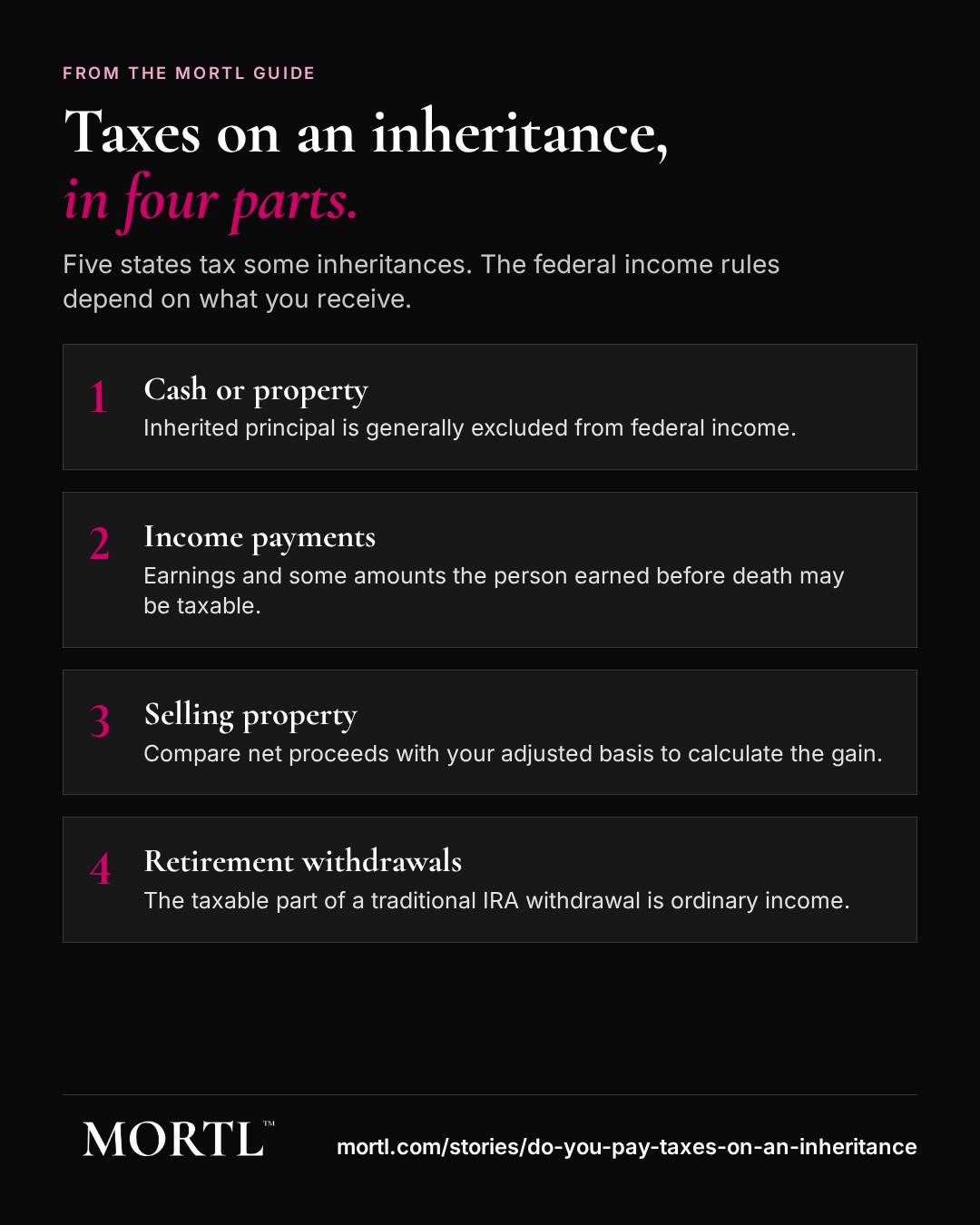
Compare net sale proceeds with your adjusted basis. Your starting basis is usually the fair market value when the person died. It can be different if the executor elects a permitted alternate valuation, or a special rule applies. For example, appreciated property you or your spouse gave the person within one year of death generally keeps the person’s adjusted basis immediately before death if it comes back to you. Improvements can increase basis and depreciation can reduce it.[2][15]
Suppose your mother’s home was worth $400,000 when she died and you sell it for $410,000. With no other basis adjustments, the gain is $10,000 before selling costs. An inherited capital asset that qualifies for date-of-death basis is generally treated as held long term even if you sell quickly.[2][3][28]
Keep the valuation, receipts, and closing statement. If the estate sends you Schedule A of Form 8971, a consistent-basis requirement may apply. Use Schedule D and Form 8949 as applicable when you report the sale.[2][15]