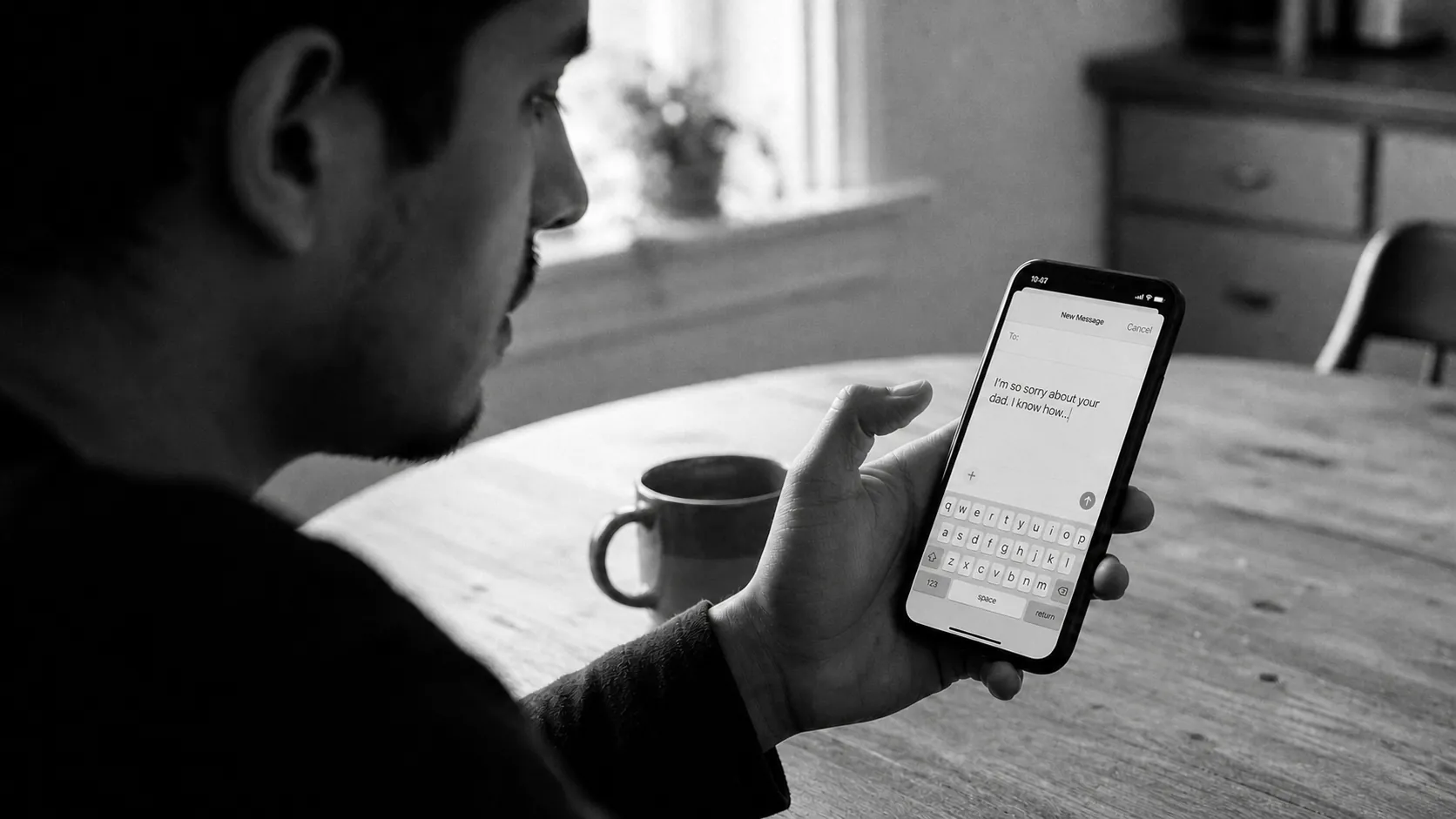
A parent died. Tell them one thing their parent did that they'd never hear otherwise.
- "I'm so sorry about your mom. She fed me every day of eleventh grade and never once acted like it was a favor."
- "Your dad was the only adult who talked to me like a person when I was fifteen. I'm so sorry."
- "I know it was complicated with your dad. That doesn't make it smaller. I'm here for whatever this actually is for you."
What the first year looks like from their side is in grief after losing a parent.
A spouse or partner died. Name how long it was, then bring something.
- "I'm so sorry about Tom. Thirty-one years is most of your life. I'm leaving dinner on the porch Tuesday at 6."
- "I'm so sorry. I'll be around for the boring parts too, the paperwork and the phone calls. Put me to work."
A child died. Fewer words. No explanations, no lessons, nothing about strength. Use the child's name, and keep using it for years. In that study of 372 bereaved adults, three quarters of whom had a child die, one of the responses people named as hurtful was everyone around them never mentioning the child again.[1]
- "There are no words for this and I'm not going to try to find any. I love you."
- "I'm so sorry about Noah. I loved him. I'll say his name whenever you want to hear it and I'll be quiet whenever you don't."
- "Thinking about Sofia today, and about you." Send that one on her birthday, every year.
What this loss does over the years after is in grief after losing a child.
A sibling died. Nobody else had their history with that person.
- "I'm so sorry about Danny. Forty years of the same house and the same parents, and now you're the only one who remembers any of it."
- "You and Rachel had an inside joke running since 1987 that I never once understood. I'm so sorry."
The death was sudden. Ask nothing. "What happened?" makes them tell the story again, and they've told it eleven times today.
- "I just heard. I'm so sorry. I'm not going to ask you anything. I'm bringing groceries tomorrow at 10 and leaving them at the door."
- "This came with no warning at all and I'm so sorry. I'm free all week, any hour, for talking or for sitting there saying nothing."
Why a sudden death is different to grieve is in sudden death grief.
It was a long illness. Skip "at least she's not suffering" and "it was a blessing." Hospice Foundation of America lists suggesting a death was for the best among the things not to say.[6] The caregiving years were their own loss, and today is another one.
- "I'm so sorry about your mom. Two years of watching that was its own kind of loss, and today is a new one."
- "You took care of her for three years. I watched you do it. I'm bringing food Thursday, and I'm not asking you to be okay."
Why grief after a long illness catches people off guard is in grief after a long illness.
A pet died. Use the animal's name and take the loss at full size. Cornell's veterinary college, which runs a pet loss support hotline, says a pet's death can have a serious effect on individuals and families, with no normal way to grieve it and no timeline it follows.[12]
- "I'm so sorry about Biscuit. Fourteen years of a dog is fourteen years of your life."
- "The house is going to feel wrong for a while. I'm sorry about Mango."
- "You gave him a calm ending. That was the last kind thing in a very long line of kind things."
Never write "he was just a dog," and don't ask whether they're getting another one. More in grief after losing a pet and what to do when your pet dies.